Specifying Bamboo Furniture: What Buyers Should Confirm Before Sampling
Bamboo looks beautiful in a photograph and can be attractively priced. That makes it easy to specify, but it also makes it worth looking more closely at how the furniture is actually made before committing it to a hospitality program.
Bamboo has moved well beyond being a decorative accent. Hotel groups are looking for natural materials with a credible sustainability story. Retailers want warmth and character without the cost of solid hardwood. Designers are drawn to the clean, linear look that bamboo creates, which is very different from woven rattan. Used in the right setting and made properly, it can be an excellent material.
The challenge is that bamboo is also easy to produce poorly. Two chairs can look nearly identical in a supplier photograph and perform very differently after a single humid season. The difference usually comes down to details that rarely appear on the first quotation: species, wall thickness, moisture content, treatment, and joinery. Those are the details worth confirming before a sample is approved, not after problems begin to appear.
Bamboo Is a Grass, Not a Wood
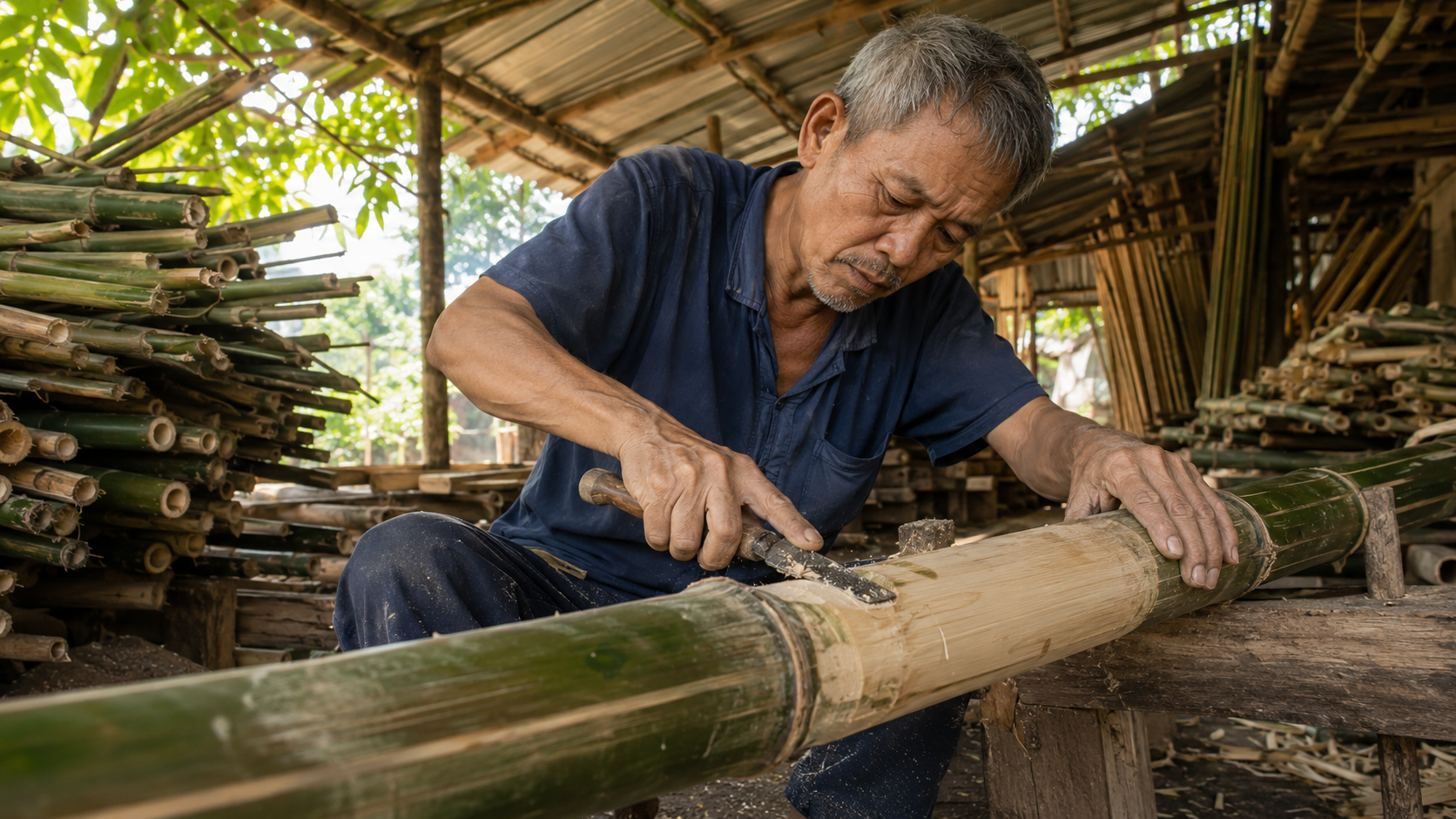
Bamboo is not timber. In managed stands, mature culms can typically be harvested in roughly three to five years while the plant continues to regenerate. That growth cycle is at the heart of bamboo's sustainability story, and it gives brands something more tangible to talk about than broad claims around responsible sourcing.
The same biology also creates some of the material risks. Bamboo contains starches and sugars that can attract powderpost beetles, and it holds moisture that must be removed carefully during drying. Both issues are manageable, but they need to be handled at the workshop before production begins. A good finish cannot make up for bamboo that was never treated or dried correctly in the first place.
One of the most useful questions to ask a supplier
Ask what moisture content the bamboo is dried to and whether that target is adjusted for the destination market. A supplier who can answer clearly and specifically is usually working from a controlled process. A vague answer is a sign that moisture may not be measured consistently.
Five Details to Confirm Before You Sample
Species and maturity
Vietnam produces several furniture-grade bamboo species, and their wall thickness and density can vary considerably. Mature culms are generally the better choice for furniture because younger bamboo may look similar at first while offering much weaker long-term performance.
Wall thickness and diameter
Both dimensions affect strength and load capacity. A commercial dining chair and a residential accent piece should not be built to the same specification, so a quotation that leaves out diameter and wall thickness is difficult to evaluate properly.
Treatment method
Confirm how the bamboo is treated against insects, what process is used, and how long that treatment takes. It is better to have that documented before pricing is finalized than to discover later that suppliers are working to different standards.
Drying and moisture target
Furniture destined for a heated interior in New York or Chicago may need a different moisture target than furniture that will remain in a tropical climate. Drying the bamboo for the environment where it will actually be used helps reduce the risk of splitting after installation.
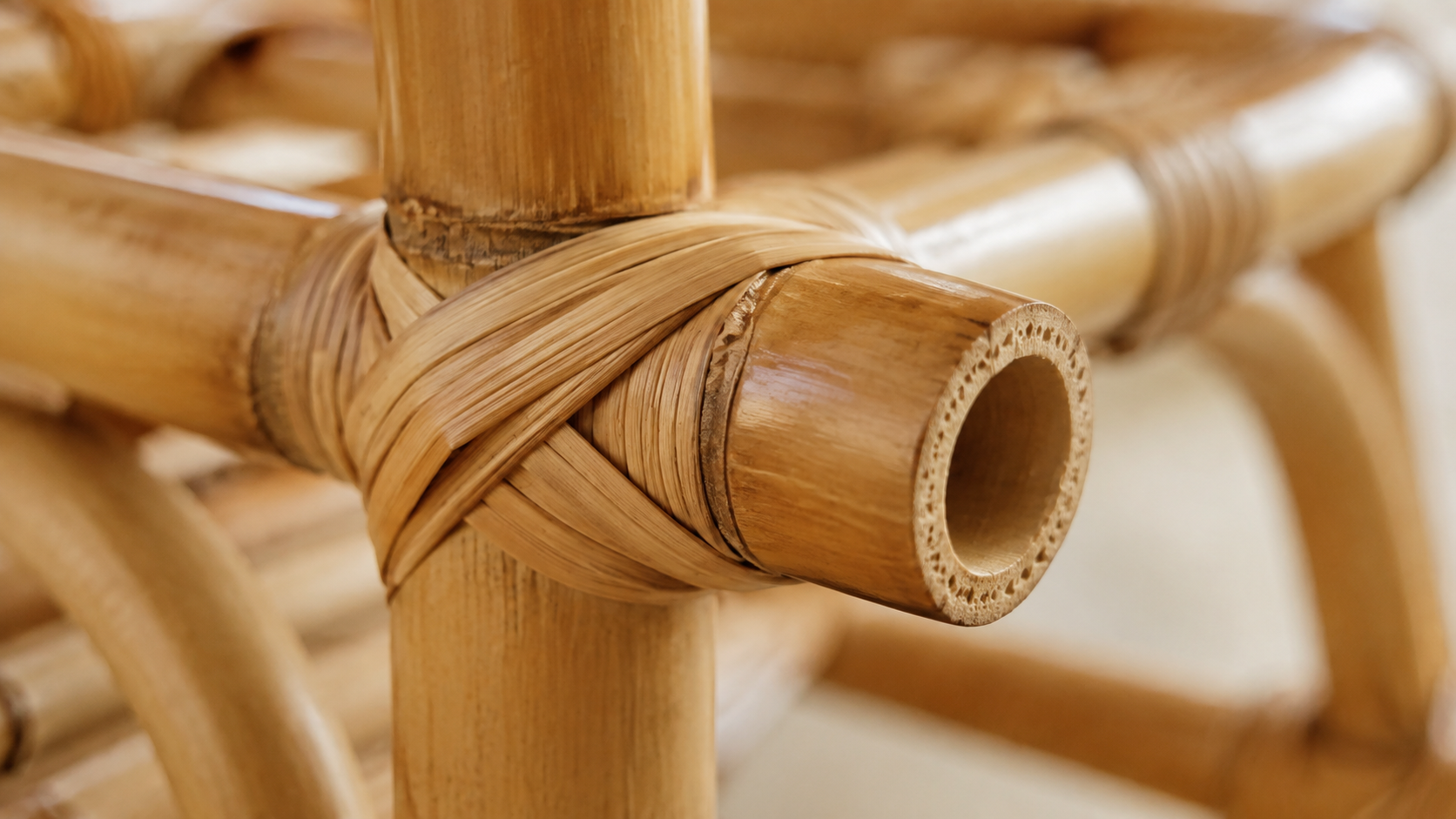
The fifth detail is joinery. Because bamboo is hollow, a connection that works well in solid wood may not perform the same way in bamboo. Pinned, lashed, and mechanically reinforced joints all behave differently under repeated use. On chairs and bar stools in particular, it is worth understanding how each connection is built and where reinforcement has been added.
Where Bamboo Works Best, and Where It Does Not
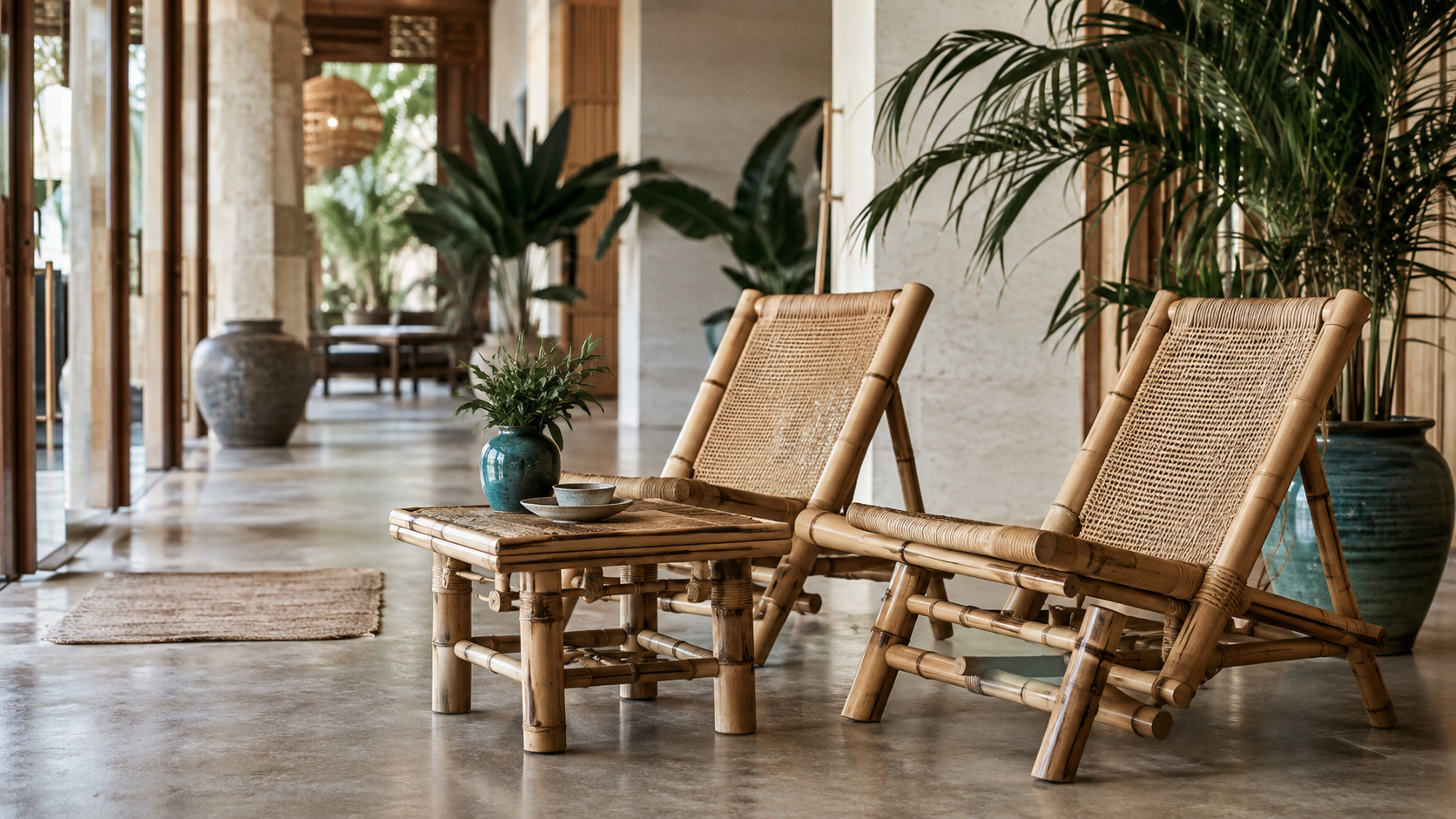
The right material depends heavily on where the furniture will be used. Bamboo is well suited to interiors such as guest rooms, lobbies, restaurants, retail spaces, and residential settings. It can also work well on covered terraces and shaded verandas when the finish is appropriate and the maintenance expectations are clear from the beginning.

Good sourcing often comes down to asking the unglamorous questions early.
Bamboo and Rattan in the Same Program
Many strong hospitality programs use both materials. Bamboo works well for architectural elements such as screens, headboards, and frames, while rattan or wicker can bring softness and texture to woven seating. They pair naturally, but the production still needs to be coordinated so finish tones and material colors feel consistent throughout the space.
That coordination is also one of the practical reasons to consolidate materials with a single manufacturing partner. Split a program across several suppliers and you are also managing several quality standards, lead times, and sets of finish samples, all of which need to come together in the same room.
How Pham Lifestyles Approaches Bamboo
We produce bamboo through the same workshop network in Vietnam that handles our rattan and wicker work, with projects coordinated from New York. Material specification, treatment, drying, and finish are documented before sampling begins and reviewed again at sample approval. For clients already producing rattan or wicker with us, adding bamboo can be handled as part of the same program rather than as a separate sourcing exercise.
If you are evaluating bamboo for a hospitality program, retail line, or custom residential project, the best place to start is with drawings or reference images, the intended environment, and an approximate quantity. From there, we can recommend materials and construction approaches and develop pricing around the program.
Handcrafted furniture from Vietnam
Explore Bamboo for Your Next Program
Pham Lifestyles works with hospitality groups, retailers, importers, and designers to develop handcrafted bamboo, rattan, wicker, and all-weather furniture in Vietnam, with each program coordinated from New York.
Start a Conversation