Hotel Furniture RFQ Framework: What to Include When Sourcing FF&E from Vietnam
The quality of a hotel furniture program is often decided before a single sample is made. The request for quotation sets the terms that every price, timeline, and construction decision will follow.
Vietnam has become a major sourcing market for hospitality furniture. Boutique hotel groups, resort developers, and lifestyle hospitality brands now source everything from poolside dining sets and lobby seating to guestroom casegoods from Vietnamese manufacturers. The programs that run well share a common starting point: a request for quotation that defines the product, the environment, and the commercial terms clearly enough for every supplier to price the same thing.
This guide sets out what a hotel furniture RFQ should include, how to use the responses to qualify a manufacturer, and where hospitality buyers most often lose time and money. It is written for procurement directors, FF&E coordinators, and design teams preparing an active program. A downloadable checklist version of the framework is included below.
What Should a Hotel Furniture RFQ Include?
A hotel furniture RFQ should include seven parts: a program overview, item-level specifications, performance and compliance requirements, sampling terms, quality and inspection requirements, packing and logistics instructions, and commercial terms. Together they give every manufacturer the same brief, so the quotes that come back can be compared line by line.
Each part is outlined below. Treat the framework as a working structure. Not every program needs every field, but any field left blank becomes a decision the factory makes on your behalf.
1. Program overview
Property type and location, climate and exposure by zone, opening date and delivery window, the zones being furnished (lobby, guestrooms, F&B, pool deck), quantities by item, and the design intent documents that govern the package.
2. Item specifications
Dimensions, primary material and grade, frame material and wall thickness, joinery, weave pattern and density, finish system and color standards, upholstery (including COM or COL fabric), and hardware.
3. Performance and compliance
Use intensity, cleaning products and frequency, load requirements, outdoor exposure (UV, salt air, chlorine), and the flammability or performance standards that apply in the property's jurisdiction.
4. Sampling
Number of sample rounds, sample cost and whether it is credited against the order, who reviews and approves, and confirmation that the approved sample becomes the production reference.
5. Quality and inspection
In-line and final inspection points, the acceptance quality limit (AQL) for final inspection, the buyer's right to third-party inspection, and the process for defects found before shipment.
6. Packing and logistics
Carton and protection specifications, knock-down or assembled shipping, labeling by room or zone, the container loading plan, the preferred incoterm, and the port of loading.
7. Commercial terms
Pricing format (unit and tiered by quantity), payment structure, lead time broken into phases, quote validity period, warranty terms by component, and attic stock quantities for future replacements.
Download the Hotel Furniture RFQ Checklist
A two-page, printable version of this framework, with a quote review checklist and a key dates planner to use alongside your own RFQ documents.
Why Vague RFQs Produce Quotes You Cannot Compare
When a specification is unclear, each manufacturer fills the gaps differently. One prices the least expensive construction that fits the description. Another adds margin to cover the risk of revisions. A third quotes the product it already makes. By the time responses arrive, the buyer may be comparing three different chairs under the same line item.
The gap is widest in handcrafted categories such as rattan and wicker. Two chairs can share a silhouette while differing in weave density, frame material, joinery, and finish. A lower price often reflects a different construction method, and without a defined specification, that difference tends to surface during sampling or, worse, after delivery.
The RFQ is the first specification document
Everything that follows, from sampling to final inspection, is measured against what the RFQ defined. The clearer it is, the fewer assumptions travel into production.
Specifying Materials and Construction for Hospitality Use
Hotel furniture carries heavier use, more frequent cleaning, and harsher environments than residential furniture. The specification section of the RFQ should reflect where and how each piece will actually be used.
Material type and grade. "Rattan" or "synthetic fiber" on its own leaves too much open. Name the grade or type, the diameter or gauge where relevant, and the performance required. Natural rattan varies in flexibility and durability, and all-weather synthetic fiber intended for outdoor use needs a UV and moisture specification that indoor material does not.
Frame and joinery. State the frame material (aluminum, steel, hardwood, or bamboo), the tube wall thickness for metal frames, and the joinery method at structural joints. These choices shape weight, strength, and service life more than any visible feature.
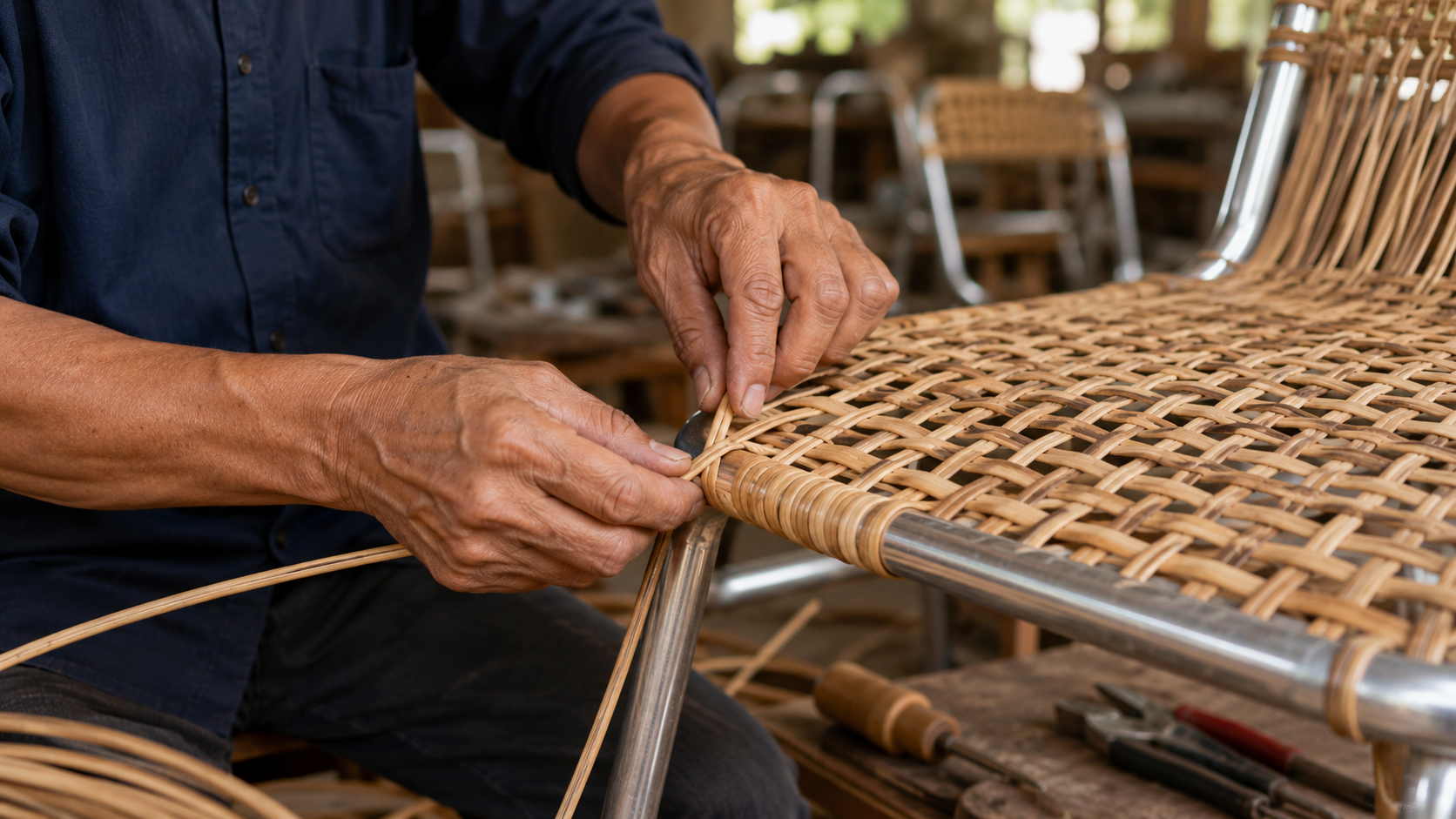
Finish and coating. Outdoor pieces face UV, salt air, chlorine, and commercial cleaning agents. Indoor pieces may carry fire or finish requirements set by the property or by local code. Define these before pricing so they are built into the quote. For outdoor programs, our outdoor furniture specification guide covers powder coating, UV stability, salt air protection, and hardware grades in detail.
Performance environment. A poolside lounger at a coastal resort and an accent chair in a Manhattan lobby have very different jobs. Describe exposure, usage intensity, and cleaning routines for each zone so the manufacturer can specify accordingly.
Dimensions and design intent. Seat height, table clearance, stacking requirements, and weight limits all affect how a piece performs in a hotel. Include drawings, reference images, and finish samples with the RFQ. Design intent introduced after pricing usually means a re-quote.
Commercial Terms Hospitality Buyers Often Leave Out
Specifications receive most of the attention in an RFQ, but commercial terms decide whether the program stays on budget and on schedule. These are the terms most often missing from a first draft.
Incoterms. State whether you want pricing FOB (free on board at the Vietnamese port), EXW (ex works, at the factory), or delivered to your destination. Each term shifts cost and risk differently, and quotes priced on different terms cannot be compared directly. Our guide to importing furniture from Vietnam covers duties and landed cost in detail.
Payment structure. A deposit at order confirmation with the balance due before shipment is a common structure in Vietnamese manufacturing. Ask each supplier to state its terms so they can be weighed alongside price.
Attic stock. Many hotel groups order a small percentage of extra pieces, or spare components such as cushions and seat panels, to replace damaged items later without a new production run. Requesting attic stock at the RFQ stage keeps it in the same production batch, so color and finish match the original order.
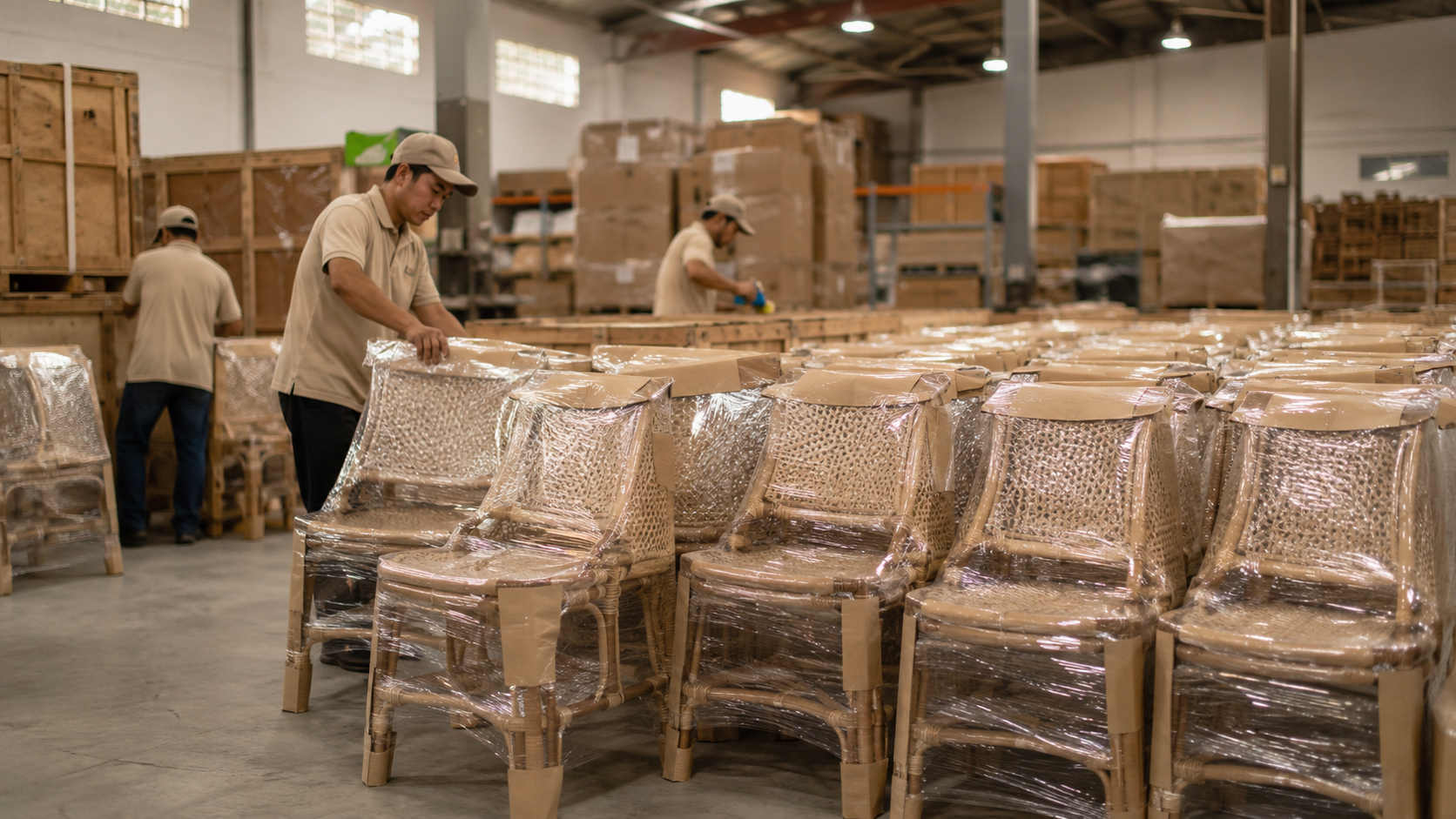
Labeling and delivery sequencing. For phased openings or multi-zone installations, ask for cartons labeled by room, floor, or zone. Sorting mislabeled freight on site is one of the more expensive delays in an installation.
Warranty. Ask for warranty terms by component (frame, weave, finish, upholstery) and a definition of normal commercial use. A warranty written around residential use may not cover the conditions a hotel creates.
What the Quote Should Come Back With
A unit price alone does not give a procurement team enough to evaluate a supplier. Ask each manufacturer to return:
- Itemized pricing that references your specification line by line
- Construction drawings or cross-sections for key items
- Sampling cost, timing, and revision policy
- Minimum order quantities by item, with tiered pricing where available
- A lead time broken into sampling, production, finishing, inspection, and packing
- Stated assumptions and exclusions
- The period for which the quote remains valid
Stated assumptions and exclusions often reveal more than the price. A supplier that lists what its quote excludes has read the RFQ closely.
Using the RFQ to Qualify the Manufacturer
The responses to a detailed RFQ also show how each manufacturer thinks. A capable factory will discuss material options, construction tradeoffs, realistic lead times, and the limits of what it can produce. The quality of those answers is often as useful as the price.
Technical engagement. Check whether the response addresses the materials and methods you specified. A manufacturer experienced in hospitality work, particularly with handcrafted Vietnamese furniture for boutique hotels, should be able to explain its construction and may suggest adjustments based on comparable programs.
Phased lead times. A single "60-day delivery" promise gives a procurement team very little planning detail. A timeline broken into sampling, production, finishing, inspection, and packing gives the team milestones it can track.
Candor about limitations. Every factory has constraints. A manufacturer that is open about minimums, material availability, or peak-season capacity is usually easier to work with than one that accepts every requirement without question. Questions in return are a good sign.
For a broader framework on evaluating suppliers, see our guide to vetting a Vietnam furniture manufacturer.
A serious RFQ tends to get a serious response.
Common RFQ Mistakes That Cost Hospitality Buyers
Sending a generic RFQ to a long list of factories. A broad send produces many shallow responses. Pre-qualifying a short list of manufacturers with hospitality experience, then sending each a detailed request, usually yields better pricing and better information.
Comparing quotes on unit price alone. A lower chair price does not help if the construction shortens service life or the lead time puts the opening date at risk. Compare total program cost, including sampling, freight, duty, and expected replacement.

Leaving out environment and compliance context. A beachfront resort needs a different material and finish strategy from an urban hotel, and flammability requirements vary by jurisdiction. Context missing from the RFQ usually returns later as a revision, a re-quote, or a delay.
Treating sampling as an afterthought. Define the number of rounds, who pays, what will be reviewed, and how revisions are handled. Agreeing on the process early avoids friction once a supplier has been selected.
Changing design intent after pricing. Late changes to dimensions, finishes, or fabrics reset both pricing and lead time. Lock design intent before the RFQ goes out, or flag open items clearly so suppliers can price the options.
Where a Strong RFQ Leads
A well-built RFQ gives the buyer more than accurate pricing. It sets shared expectations around materials, construction, timing, and approval before production begins, and it shows quickly which manufacturers are prepared for hospitality work.
For hotel groups sourcing from Vietnam, that clarity carries through the entire program. Pham Lifestyles works with hospitality teams on rattan, wicker, bamboo, and all-weather synthetic fiber programs, from specification review through production and export. Our production capabilities cover seating, dining, accessories, and custom architectural pieces, and brands developing their own designs can find more in our guide to OEM and private label manufacturing.
Hospitality FF&E · Produced in Vietnam
Discuss Your Next FF&E Program
If you are preparing an RFQ for a hotel, resort, or restaurant program, we are happy to talk through the scope before it goes out. Share the property type, the pieces involved, and your opening timeline, and we will tell you whether our production network is the right fit.
Start a Conversation