Vietnamese Furniture for Boutique Hotels and Design Projects
Boutique properties are defined by how a room feels, and furniture does more to shape that experience than almost anything else in the specification.
A guest may not remember the thread count, but they will remember whether the lobby felt distinctive or generic. Much of that comes down to material, proportion, and whether the furniture feels chosen for the property rather than pulled from a standard contract catalogue.
The challenge is that distinctive furniture and durable furniture do not always come together naturally. Contract-grade pieces can withstand commercial use but often look generic. Beautiful residential pieces may not hold up to hotel traffic. This guide looks at how to balance both, what to specify from one zone to the next, and how a handcrafted furniture project actually moves from concept to delivery.
What Boutique Properties Need That Residential Specification Misses
Commercial seating takes a level of use that residential furniture rarely sees. A lobby chair may be used dozens of times a day, dragged across the floor, and cleaned with products far harsher than anything it would encounter in a home. Restaurant chairs may be moved, stacked, and reset every day.
Three things follow from that:
- Construction has to be specified, not assumed. Joinery, frame material, and the finish system have a much greater effect on service life than appearance alone. Two chairs that look almost identical in a photograph can perform very differently over time.
- Continuity matters as much as quality. If a damaged chair cannot be reproduced a few years later, a property can end up replacing an entire zone instead of a single piece. Ask about repeat production before placing the first order.
- The zone drives the material. One of the most common and expensive mistakes in hospitality furniture is choosing an interior material for an outdoor setting simply because the silhouette matches.
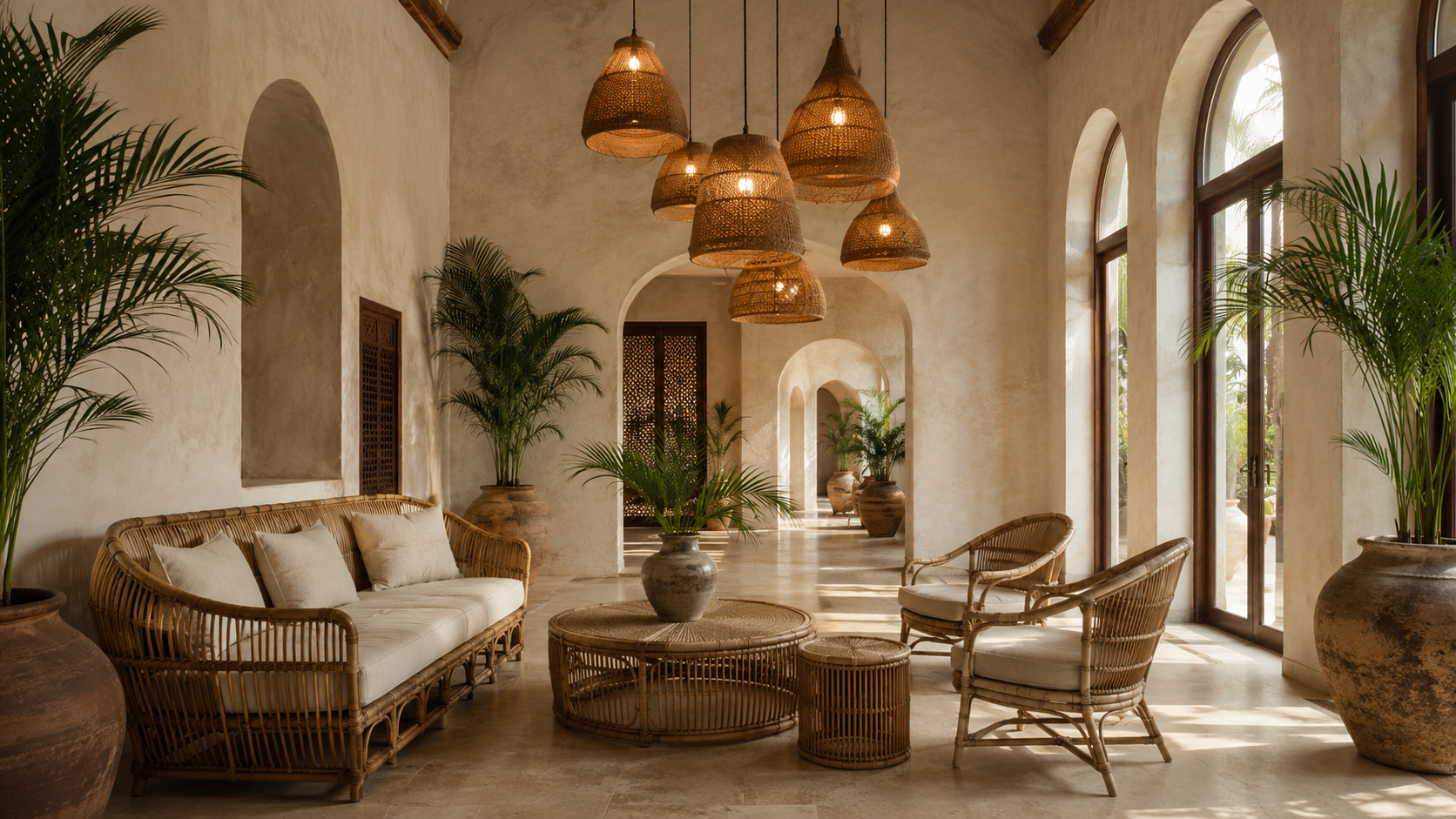
Lobby seating carries both the first impression of a property and some of its heaviest daily use.
Specifying Zone by Zone
Lobby and lounge
This is usually the highest-traffic and most visible area of the property. Natural rattan and wicker can work well because the space is protected and climate-controlled. Frame construction and finish durability matter more here than saving a small amount on material cost, because this is where wear shows first.
Guest rooms
Guest rooms see less traffic than public areas, but the same piece may be repeated across every key. When a desk chair or reading chair appears two hundred times, consistency becomes the main concern. Sample approval and acceptable finish variation need to be defined clearly before production.
Restaurant and café
Restaurant and café furniture has to deal with daily movement, spills, and frequent cleaning. Weight matters because staff are constantly repositioning the pieces. Woven seating can work especially well for that reason, provided the frame is built for repeated handling.
Terrace, pool deck, and garden
For terraces, pool decks, and gardens, all-weather synthetic fiber over powder-coated aluminium is usually the better choice. Natural cane will not perform well under constant UV, rain, or chlorine exposure, regardless of the finish. Coastal properties should also specify the frame with salt air in mind.
When a property needs visual continuity from the lobby to the pool deck, a practical solution is to use the same silhouette in two material systems: the same profile and proportions, but different fibers and frames for each environment. We cover those material distinctions in more detail in our guide to rattan and wicker manufacturing.
Where Handcraft Earns Its Place
Handwork is not automatically better than machine production. Its value comes from the things it does particularly well, and many of those happen to matter in boutique hospitality.
The first is natural variation. Cane changes in tone from one section to another, and a woven surface retains subtle evidence of the person who made it. In a mass-market setting, that might be treated as inconsistency. In a boutique property, it often becomes part of what makes the room feel individual rather than standardized.
The second is flexibility. A woven silhouette can be resized, adapted, or developed from a drawing without requiring expensive tooling. Molded and cast products often carry setup costs that make small-run customization difficult to justify. Handwork scales differently, which is why a fifty-room property can realistically have furniture made to its own specification.
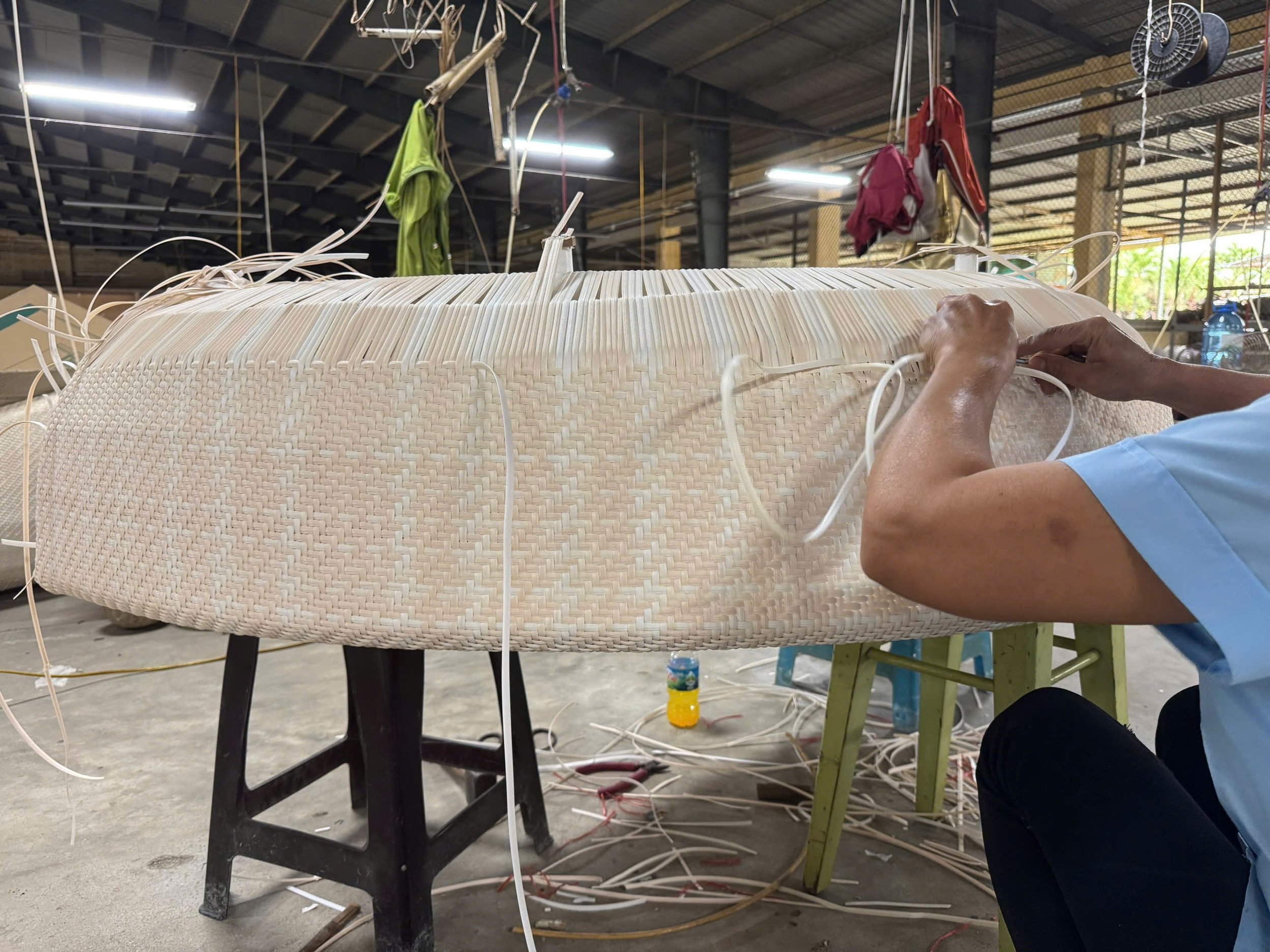
Weaving in Vietnam is a generational skill, learned through workshops and practice rather than from manuals.
Guests may not be able to explain why a room feels considered, but they can usually tell when it does not.
Design Direction That Has Held
Trend lists age quickly, and many ideas that look good on a mood board do not hold up once they reach a real property. Four directions have proven durable enough to build around.
Natural material as the anchor
Rattan, wicker, and visible wood grain bring warmth that engineered surfaces can imitate but rarely match. For properties built around locality and character, natural materials often do more than almost any other single design decision.
Restrained palette, one accent
Sand, clay, sage, and charcoal create rooms that feel calm rather than overly styled. One sculptural or more saturated piece can carry the personality of the space without competing with everything around it.
Furniture that moves
Stackable seating, nesting tables, and lighter frames allow the same room to serve different purposes throughout the day. For urban properties working with limited space, that flexibility can matter more than any particular aesthetic.
Indoor and outdoor continuity
Indoor and outdoor areas can feel connected without using the same materials everywhere. The key is to keep the proportions and design language consistent while specifying the construction correctly for each zone.
How a Project Actually Runs
Designers and procurement teams working directly with a factory for the first time sometimes expect something close to a catalogue transaction. Custom hospitality work is more collaborative, and understanding the process up front prevents a lot of unnecessary friction.
Most projects move through four basic stages. First comes specification, where dimensions, materials, finishes, and quantities are documented. Then comes sampling, where a physical piece is produced and approved. Production follows, with timing driven by quantity and finish complexity. Finally, packing and shipping determine more of the landed cost than many buyers expect.
Sampling is the stage buyers are most tempted to compress, and it is usually the wrong place to save time. A property with a fixed opening date should budget sampling separately from bulk production. Approving a piece from photographs and discovering after shipment that the proportions are wrong is a much more expensive problem than adding time at the front end.
Ask for the production sample
Showroom samples are often built by senior craftspeople with more time than a typical production piece receives. A sample taken from an actual production run gives a much better picture of what will arrive on site. With woven furniture especially, weave tension is difficult to judge in a photograph and obvious in person, which makes the physical sample essential.
Working Directly with the Workshop
We produce through our own workshop network in Nha Trang, Ho Chi Minh City, Binh Duong, and Dong Nai, with no outside trading company or agent between the client and the people making the order.
That direct relationship matters most when something changes, which is common on custom projects. A dimension may shift, a finish may be reconsidered, or quantities may change. When the buyer can speak directly with the workshop, those decisions can usually be resolved quickly. Through an intermediary, the same change has to pass through several layers, which creates more room for details to be lost.
It also means we can push back when a request is likely to create a problem. That kind of conversation is easier when the manufacturing relationship is direct.
On Sustainability
Rattan is a climbing palm that grows through existing forest canopy, matures relatively quickly, and can be harvested without clearing the forest around it. That is a meaningful material advantage and does not need much embellishment.
We also prefer to be precise about what we can support. We do not cite certifications we do not hold or sustainability percentages we cannot substantiate. What we can speak to directly is our own production, where we have visibility into working conditions and pay. Skilled weaving takes years to learn, and consistent quality depends on experienced people staying in the trade. In practice, the workforce question and the quality question are closely connected.
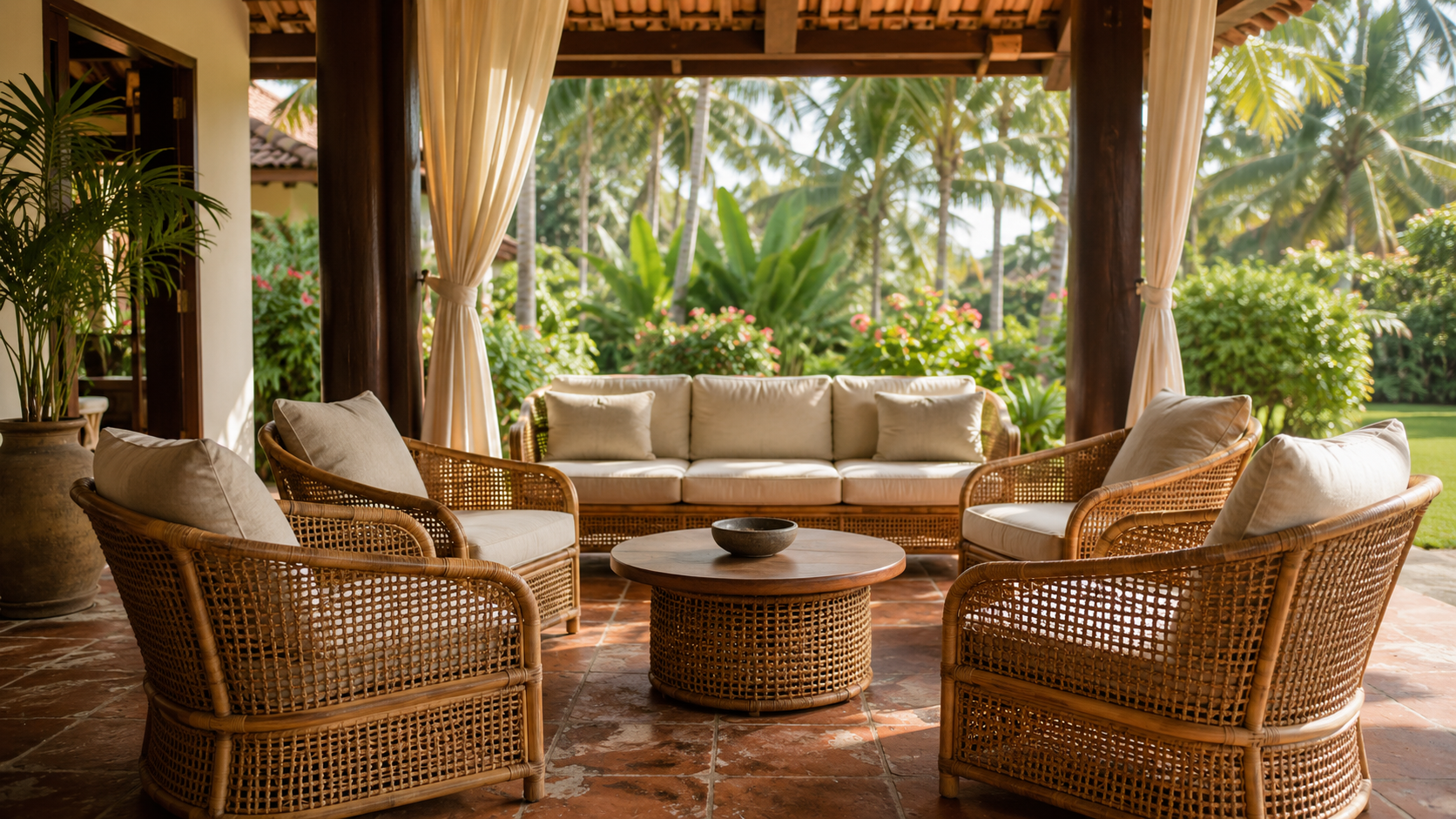
Woven seating works especially well in properties where the brief calls for warmth and character rather than complete uniformity.
Before You Brief a Factory
Having four things ready before the first factory conversation can shorten the process considerably.
- Zone-by-zone quantities. A total quantity is not enough. Material decisions change from one area of the property to another, so the quantities should be broken out the same way.
- A reference, in whatever form you have it. A drawing, photograph, existing piece, or even a clear mood direction can give the workshop a useful starting point.
- Your date, and which parts of it are fixed. An opening date needs to be worked backward through shipping, production, and sampling. Knowing where there is flexibility makes it much easier to build a realistic schedule.
- Who approves. Sampling can lose a surprising amount of time when no one has been clearly designated to sign off on the piece.
Hospitality · Design Projects
Bring Us the Project
Whether you are specifying a full property, refreshing a single zone, or simply deciding whether handcrafted furniture fits the brief, we are happy to talk through the project before anything is committed. Send us what you have and we can give you a clear recommendation on materials, approach, and timing.
Start a Conversation