Handcrafted Rattan and Bamboo Accessories for Hospitality and Retail Programs
Hotels, resorts, and retail brands increasingly source decorative accessories from the same Vietnamese production networks that supply their furniture programs. The result is material consistency, simplified logistics, and a cohesive design language from the lobby to the guest room.
Furniture anchors a space. Accessories complete it. In a hotel lobby, the pendant shades above the reception desk and the woven baskets beside the concierge register first. On a resort pool deck, the lanterns along the walkway set the atmosphere long before a guest sits down. For retail brands, curated decorative accessories help establish the visual identity that distinguishes one location from the next.
These details receive careful attention during the design phase, yet they frequently become the last line item on an FF&E schedule. Purchased from a separate vendor at a different price point, with little connection to the furniture they sit alongside, the outcome is often inconsistency—materials that do not quite match, finishes that clash under the same lighting, and a procurement process that treats decorative fixtures as commodities.
Vietnam’s rattan and bamboo production network supports a more integrated approach. The same workshops that produce handcrafted furniture for hospitality and commercial programs also manufacture decorative accessories using the same materials, the same finishing systems, and the same artisan skill sets. Sourcing both through a single production channel creates material consistency, simplifies logistics, and reduces the coordination required to manage multiple supplier relationships across a program.
What Counts as Accessories in a Production Context
The boundary between furniture and accessories can be fluid. A bamboo shelving unit that holds towels in a hotel spa serves both roles. A large-scale pendant shade that anchors a dining room carries as much design weight as the tables beneath it.
For sourcing and production purposes, the distinction is practical. Accessories are typically smaller in scale, ordered in higher unit quantities, and require different packing and handling considerations than furniture. Within a Vietnamese rattan and bamboo production facility, the most common accessory categories include the following.
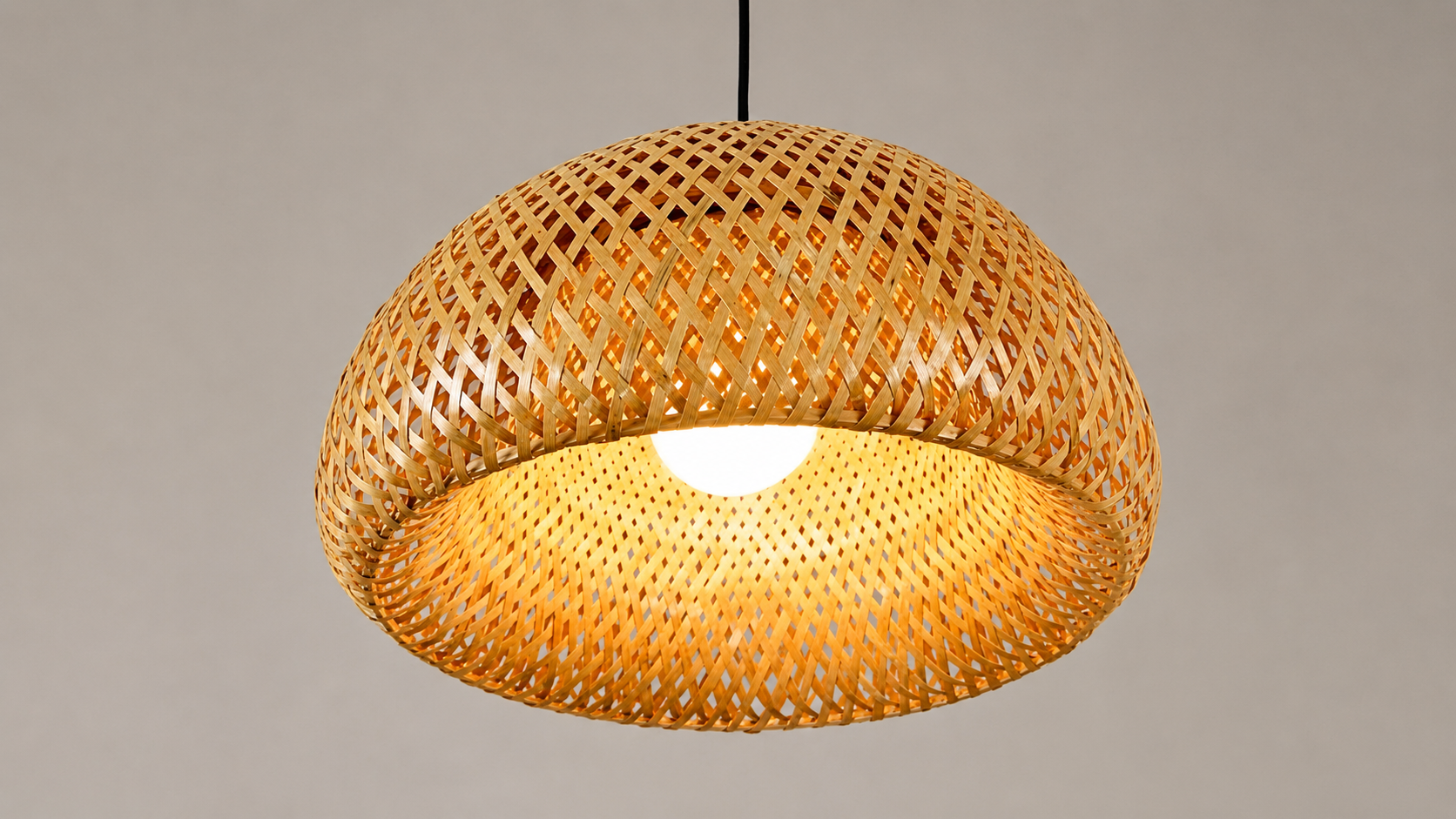
Pendant shades and lantern fixtures. Woven bamboo and rattan pendant shades rank among the highest-demand accessories in the hospitality market. Profiles range from tight-weave domes and elongated cocoons to open-frame pagoda structures and tiered geometric forms. Most ship as shades only, without electrical hardware, and are designed to fit standard pendant sockets specified by the buyer’s lighting consultant. Sizing, weave density, and transparency all influence how the shade performs with different bulb types and output levels, so specification detail is especially important in this category.
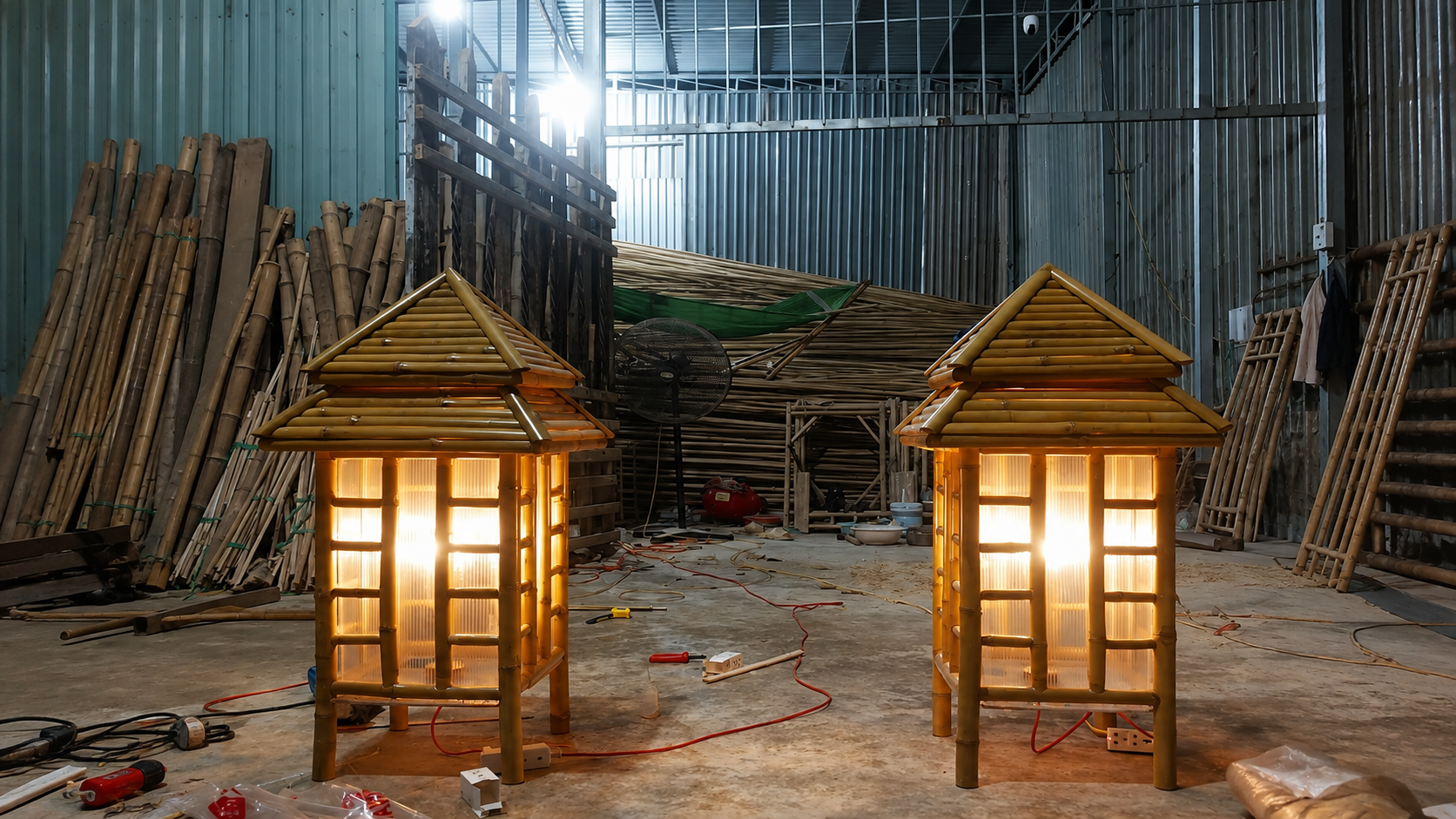
Freestanding and garden lanterns. Bamboo pagoda lanterns with frosted or translucent panel inserts serve as pathway lighting, poolside accents, and garden features across resort properties. These are structural pieces, often standing over a meter tall, and require weather treatment appropriate for outdoor placement.
Waste receptacles and bins. Purpose-built bamboo waste bins and containers for hotel rooms, lobbies, spa areas, and bathrooms form a growing accessory category. Designs range from compact room bins to larger lobby-scale receptacles with hinged lids and interior liners. These functional items carry strict dimensional requirements, and buyers typically need consistency across dozens or hundreds of units per property.
Decorative baskets and vessels. Woven rattan and bamboo baskets, bottle-form vases, and display vessels serve both functional and decorative roles in hospitality and retail settings. Weave style—open lattice, tight herringbone, radial patterns—determines visual character, while sizing and structural reinforcement determine capacity and use.
Shelving, display racks, and architectural screens. Bamboo shelving units, tiered display stands, and room dividers sit between accessories and furniture. For retail environments, bamboo display fixtures offer a natural-material alternative to metal or wood shelving. For hospitality, bamboo screen panels and partitions can define zones within open floor plans without permanent construction.
Accessories as part of the program
The strongest hospitality and retail environments treat decorative accessories as an extension of the furniture specification. Sourcing both through a single production partner keeps materials, finishes, and design intent aligned from the factory floor to the finished space.
Why Bundled Sourcing Works
Sourcing accessories from the same production network that produces the core furniture for a project offers a clear practical advantage: material integrity.
Natural rattan and bamboo vary by harvest and growing region. Color differences are common, and the way bamboo develops its surface character depends on the specific treatment and finishing process used during production. When furniture and accessories come from separate suppliers working with different material stocks and finishing systems, the result is often a visible mismatch once everything arrives on site.
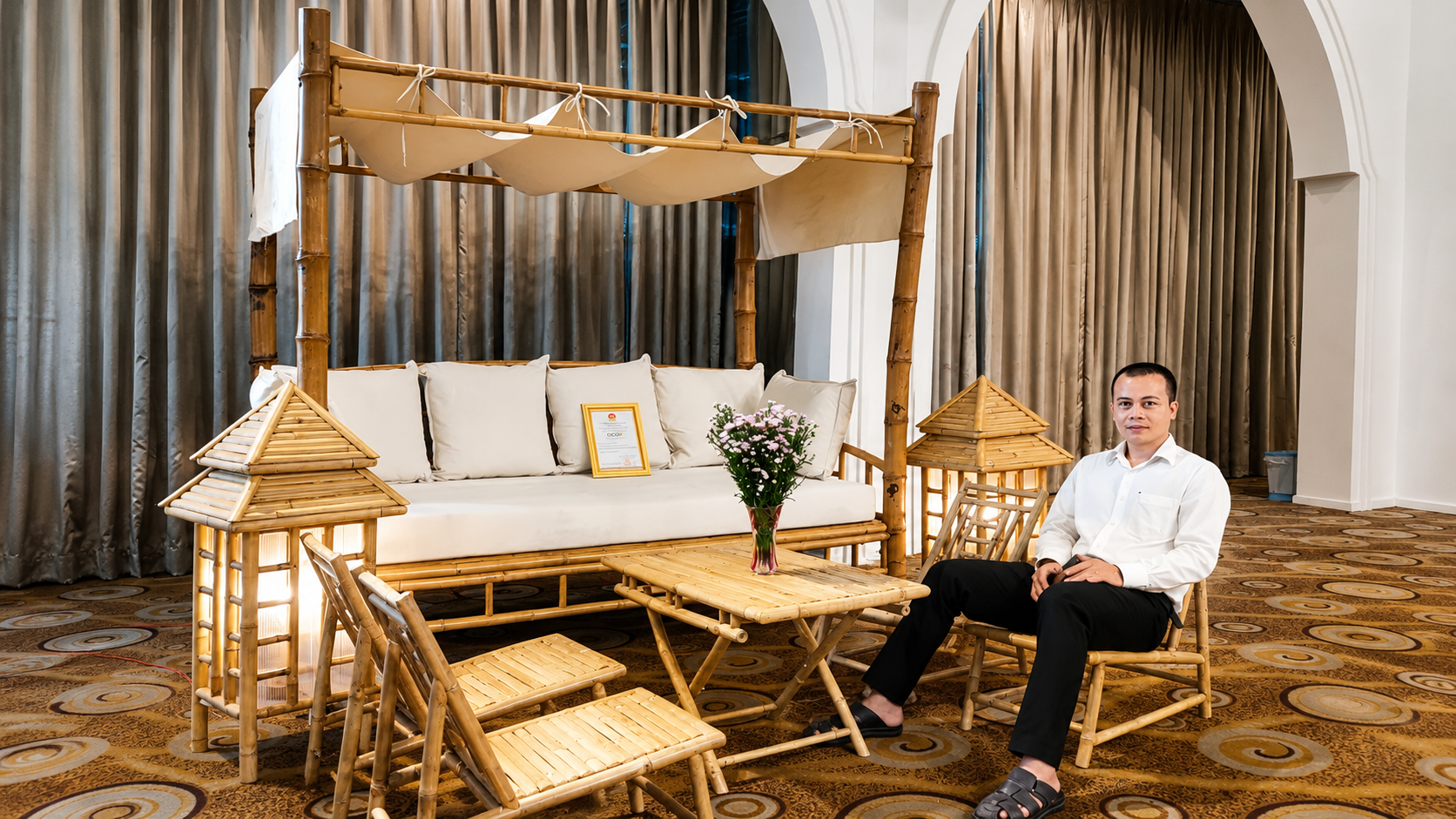
A single production partner working from the same material supply and applying the same finish treatment across both furniture and accessories resolves this issue. The rattan and bamboo used in a dining chair and the pendant shade hanging above it share the same tonal range because they were processed through the same facility.
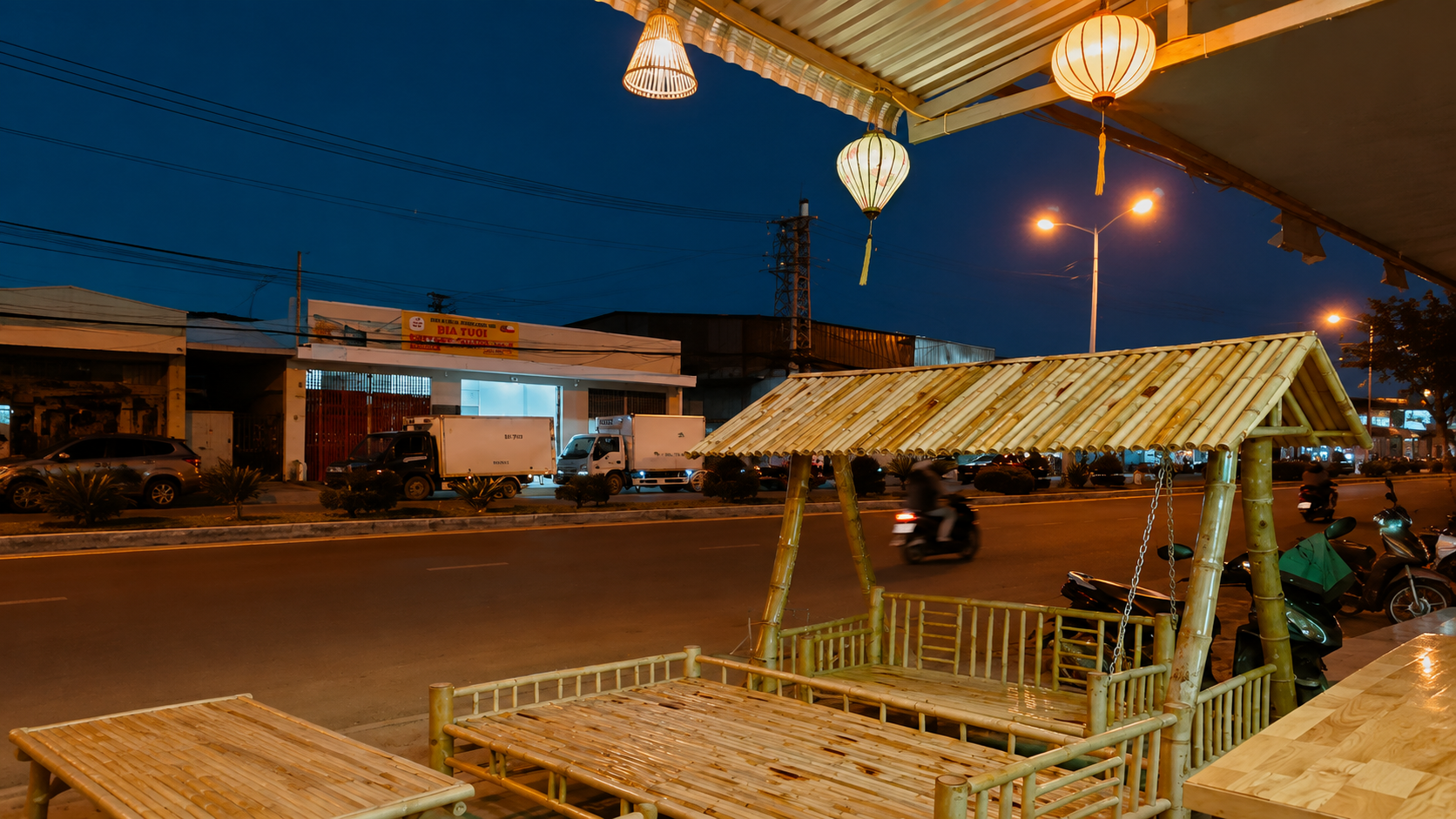
Logistics improve as well. Accessories can consolidate into the same container shipment as furniture, sharing packing and freight costs rather than generating a separate import transaction. For hospitality groups managing FF&E procurement across multiple properties, consolidation at the production end reduces documentation, customs processing, and receiving complexity at the destination.
What to Specify When Ordering Handcrafted Accessories
Accessories sourced from artisan production require the same specification discipline as furniture. In some categories they require more.
Dimensions and tolerances
Handcrafted bamboo and rattan products carry natural variation. Buyers should specify target dimensions with stated acceptable tolerances (typically plus or minus five to ten percent) and confirm internal QC processes at completion.
Finish treatment
Indoor accessories need standard lacquer or natural oil finish. Outdoor or high-humidity environments—pool areas, spas, tropical climates—require thorough treatment against moisture, insects, and UV exposure.
Hardware compatibility
Woven pendant shades typically ship without electrical components. The buyer’s lighting specification determines socket type, cord length, canopy style, and bulb rating. These details should be confirmed before production begins.
Batch consistency
Hospitality programs shipping in batches over months need visual consistency across production runs. The manufacturer should document material source, treatment process, and finish specification to support reliable reorders.
Production Considerations for Woven Accessories
Accessories share materials and skill sets with furniture, but production dynamics differ in several respects.
Handcraft variation is inherent. Every piece produced by hand carries subtle differences in weave tension, joint placement, and surface character. Buyers used to factory-made fixtures with tight tolerances should expect this range. The visual warmth of handcrafted accessories in a designed environment comes from the handwork itself. The manufacturer’s role is to keep that variation within an acceptable range.
Batch sizing and order planning. Accessory orders often involve higher unit counts than furniture orders. A boutique hotel might order 30 dining chairs but 120 pendant shades to cover guest rooms, common areas, and restaurants. Large accessory runs require the manufacturer to stage material, coordinate multiple artisans working in parallel, and maintain quality consistency across the full order. Discussing batch sizing early allows the factory to plan labor allocation.
The same artisans who weave a dining chair also produce the pendant shade that hangs above it. That shared skill makes a coordinated accessories program possible.
Packing and transport. Accessories are often more fragile in transit than furniture. A bamboo pendant shade that performs well in the workshop can crack during shipping if packing is inadequate. Proper export packing includes individual wrapping, internal supports to prevent deformation under stacking weight, and container loading plans that account for the product’s specific vulnerabilities. Experienced manufacturers build packing considerations into the production process.
Lead times. Accessory lead times vary with complexity. Simple bamboo bins or baskets may require four to six weeks from order confirmation to shipment. Complex woven pendant shades with intricate patterns or custom profiles may take eight to twelve weeks, especially on first orders where sampling and approval add time at the start of the timeline.
Building an Accessories Program
For hospitality groups and retailers exploring rattan and bamboo accessories for the first time, the most efficient starting point is a conversation about the broader project context. Understanding the full scope of a furniture and accessories program allows the production partner to recommend materials, finishes, and product categories that work together visually and perform in the intended environment.
Pham Lifestyles produces handcrafted rattan and bamboo accessories alongside its furniture programs, working through established factory partnerships across Vietnam’s southern production regions. The company’s production network covers pendant shades, lanterns, decorative fixtures, waste receptacles, shelving, and architectural bamboo elements for hospitality, retail, and commercial clients. To explore accessories as part of a larger program or as a standalone category, visit the About page or reach out directly.
Handcrafted accessories from Vietnam
Complete your furniture program with coordinated accessories
Pham Lifestyles supports hospitality groups, retailers, and commercial clients with handcrafted rattan and bamboo accessories, produced alongside furniture programs and coordinated from New York.
Start a Conversation