OEM, Private Label, and Custom Furniture Manufacturing in Vietnam: How Each Production Model Works
OEM, private label, and custom manufacturing each define a distinct production relationship. Each one runs differently in practice once a program moves past the quoting stage.
These three models differ in more than name. Each defines who provides the design, who controls the specification, how sampling is structured, and how quality responsibility is shared between buyer and manufacturer.
For buyers sourcing woven furniture from Vietnam (rattan, wicker, bamboo, all-weather synthetic fiber), the production model also shapes material decisions, weaving specifications, frame engineering, and finishing systems in ways specific to the category. A manufacturer with operational depth in one model may not have it in another. The differences become clear once a program moves past the quoting stage.
This guide covers how each model works in practice at the production level, with the specifics that apply to handcrafted woven furniture.
OEM Manufacturing in Practice
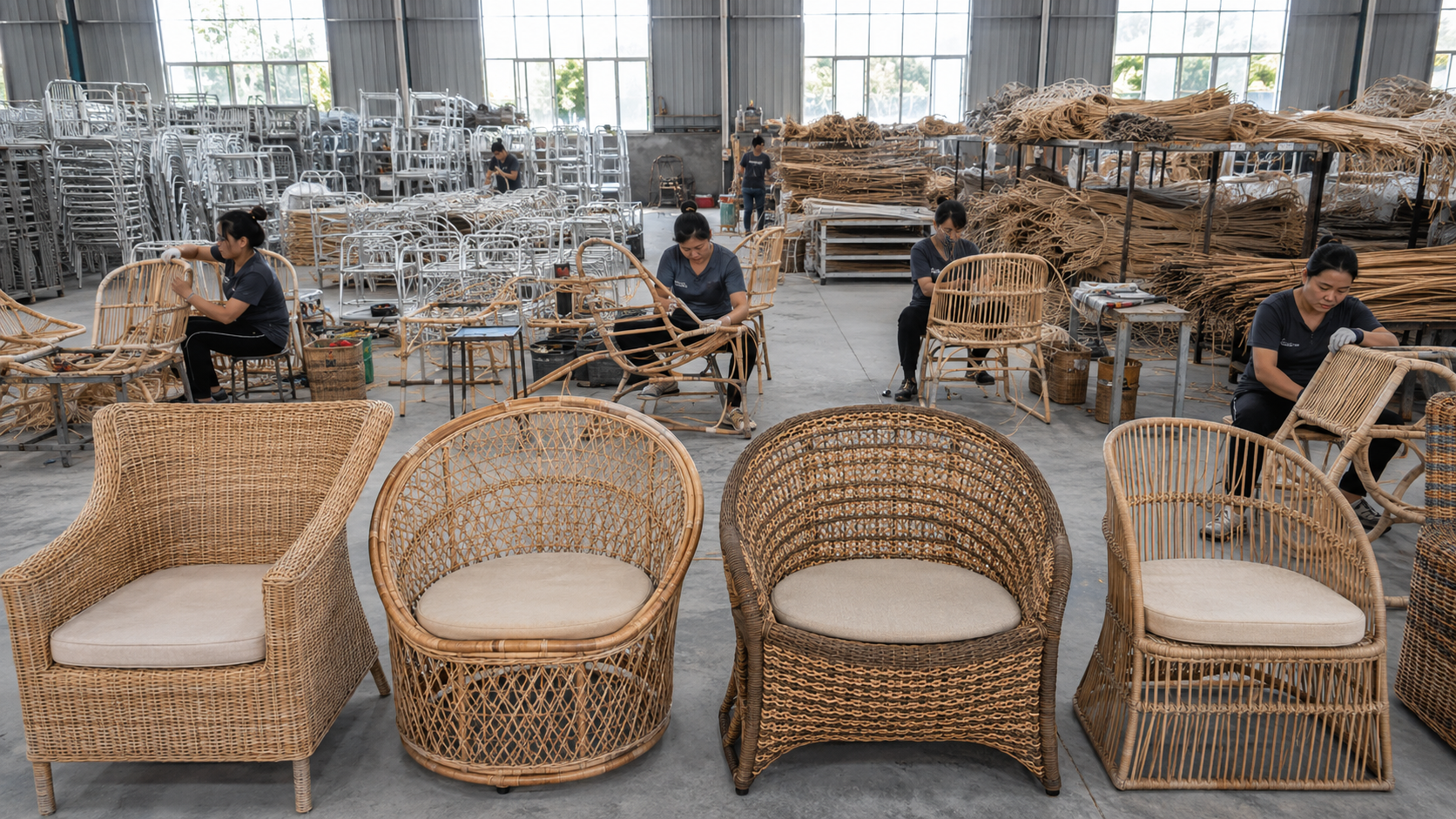
In an OEM program, the manufacturer produces furniture from its existing design library. The buyer selects proven models, specifies branding and packaging requirements, and commits at program-level volumes. The manufacturer retains ownership of the underlying design. The buyer owns the brand, the customer relationship, and the market positioning.
What the buyer provides. Brand specifications (packaging, labeling, hang tags), target market and end-use environment, volume commitment, and shipping terms. The buyer is not expected to provide product designs or engineering documents. That investment has already been made by the manufacturer.
What the manufacturer provides. Proven product designs with established production data, existing frame tooling, calibrated weaving patterns and finishing systems, and a clear understanding of how each model performs in the field. A rattan and wicker manufacturer with production history on a given chair frame already knows where stress points develop, which weave patterns hold up under commercial use, and which finishes perform across different climates.
How sampling works. OEM sampling confirms that an existing design meets the buyer’s quality standard. The product already exists in production, so the sample serves as a reference point for finish, weave consistency, frame quality, and packing rather than a design development exercise. This shortens the timeline significantly compared with private label.
Quality and communication. The manufacturer’s standard quality system governs production, since the product was developed under that system. The buyer should confirm what the quality process covers (in-line checks, pre-shipment inspection, packing verification) and establish a communication cadence for production updates and photo documentation.
Container economics. OEM programs scale efficiently. Because the production process is already refined, container-level orders do not carry the development overhead that comes with new product programs. Pieces designed around the manufacturer’s existing nesting and stacking logic also tend to pack more efficiently, which improves landed unit cost.
Design exclusivity is the main limitation. The buyer does not own the underlying design, and the same or similar models may be available to other buyers under different brands. Some manufacturers offer regional or category exclusivity. The terms should be confirmed in writing before the first order.
Private Label Manufacturing in Practice
In a private label program, the buyer brings the product designs and specifications. The manufacturer provides the production capability, material sourcing, and quality systems to turn those designs into finished goods at scale. The buyer owns the intellectual property.
What the buyer provides. Production-ready specifications: dimensioned drawings, material callouts, finish references, and in many cases a physical or digital prototype. For woven furniture, the specification package also needs to address weave pattern, strand width, tension direction, and how the weave terminates at frame connection points. These are details that a strong manufacturer will ask about during the quoting stage, and that distinguish a production-ready brief from a concept sketch.
What the manufacturer provides. Production infrastructure, skilled labor, material sourcing, and manufacturability input. A capable production partner does not simply execute drawings. The manufacturer’s role is to identify where the buyer’s design creates production challenges, where material choices affect durability or cost, and where specifications need refinement before reaching the production floor. Frame geometry that creates weaving difficulties at scale, finish specifications that behave differently on woven surfaces than on flat panels, and hardware placement that interferes with structural joints are problems an experienced manufacturer catches during sampling, not during a production run.
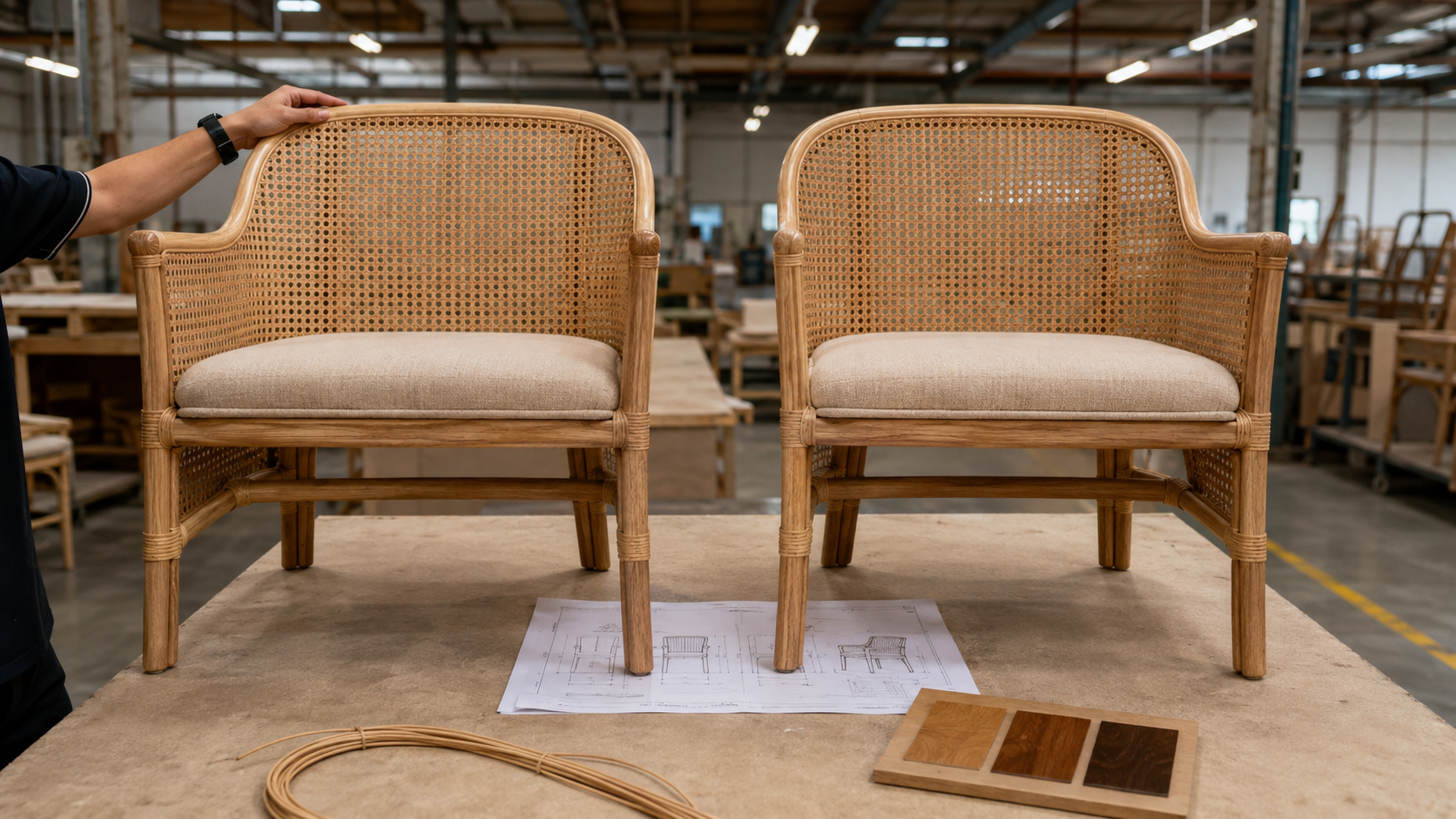
How sampling works. Private label programs require at least two rounds of sampling before production confirmation. The first sample establishes whether the design translates from drawing to physical product at the correct scale, proportion, and structural integrity. The second round addresses refinements: adjustments to dimensions, material weight, weave density, finish color, or comfort that only become clear once a physical sample exists. Depending on design complexity, additional rounds may be required. Hospitality FF&E programs in particular should build this timeline into project schedules from the start.
Quality and communication. Private label production places higher demands on the quality process than OEM, because the manufacturer is producing a design that did not originate on its own production floor. Frame inspection before weaving, weave consistency checks during production, finish quality verification before packing, and pre-shipment inspection at the container stage are all required. The buyer should confirm what the manufacturer’s standard process covers and where additional oversight may be needed. Communication structure is equally important: a single point of contact on both sides, documented change orders (email confirmations, not verbal approvals), and a defined cadence for production updates.
Container planning starts at the design stage
For buyers developing private label products, discussing packing efficiency during the design phase rather than after sample approval can improve landed unit costs. A design that fits twelve units per cubic meter ships at a different cost structure than one that fits eight.
Custom Manufacturing in Practice
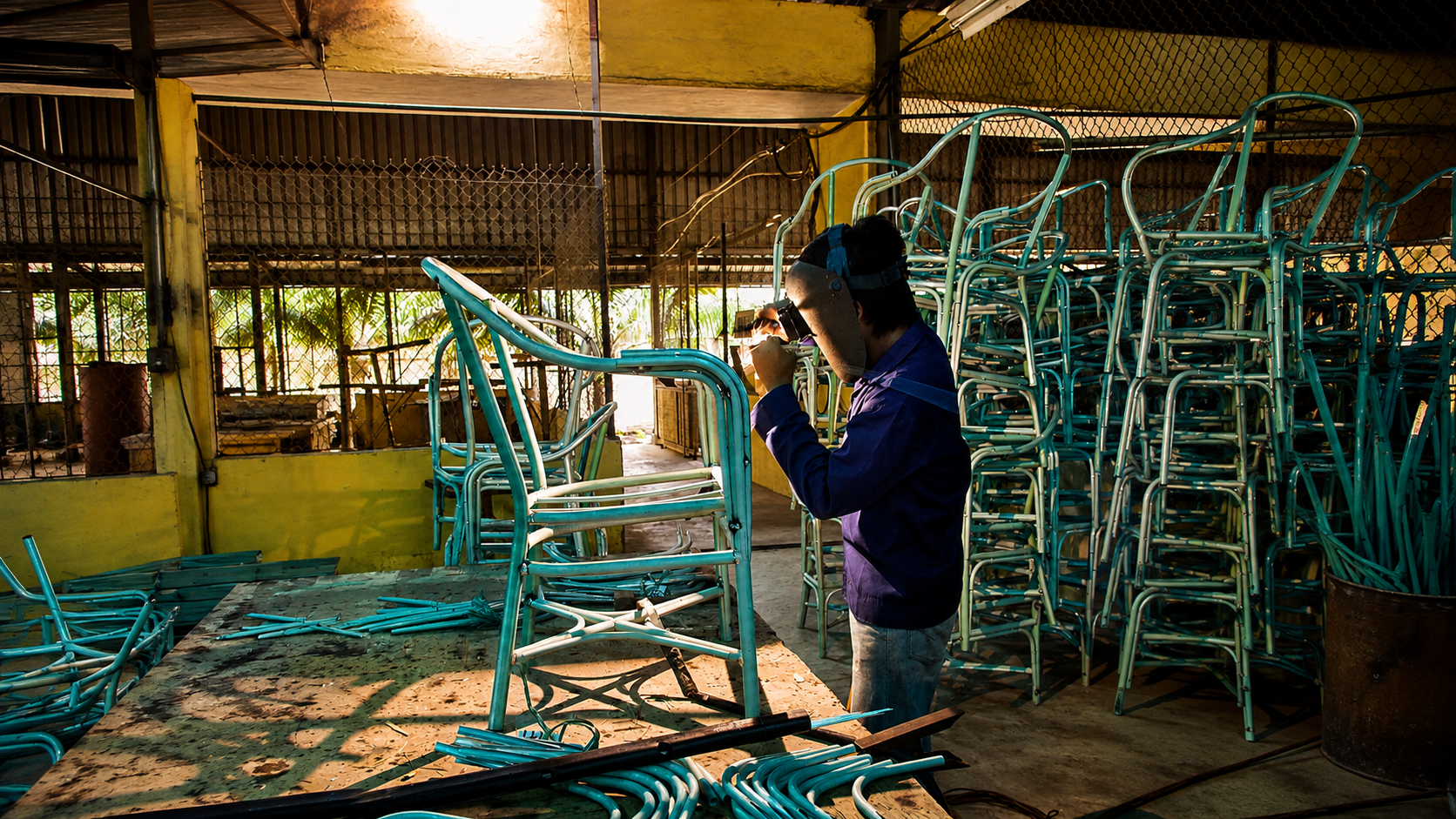
Custom manufacturing covers products developed from the ground up to a buyer’s unique specifications. It often involves new frame tooling, proprietary construction techniques, or design elements outside the manufacturer’s existing repertoire. For woven furniture, this can include architectural installations (large-scale woven screens, ceiling elements, room dividers), structurally complex pieces requiring custom frame engineering, or products that combine multiple material systems and demand new production workflows. The range of applications for handcrafted woven and bamboo furniture extends well beyond standard seating and tables.
Development investment is the highest of the three models. Custom programs involve extended design collaboration, prototype iterations, and production planning that accounts for new tooling and workflow integration. The timeline from concept to first production shipment is measured in months, not weeks.
Because of this investment, custom manufacturing performs best at program scale. Development cost per unit falls as order volume rises, and the manufacturer’s willingness to invest in new tooling tracks the program’s commercial commitment. Buyers pursuing a custom path should be ready to discuss program-level quantities and ongoing production schedules early in the conversation.
Running Multiple Models Through One Partner
Many successful sourcing programs use more than one model at the same time. A hospitality group might source seating from a manufacturer’s OEM catalog while commissioning private label decorative accessories that carry the property’s design language. A furniture brand might launch with OEM models to build market presence while developing a private label collection for the following season.
This approach works best when the buyer partners with a production partner whose network covers multiple product categories and material capabilities. Consolidating programs with a single manufacturer simplifies communication, coordinates shipping timelines, and creates volume leverage that benefits both parties.
Start with OEM, grow into private label
Use an OEM program to establish the manufacturing relationship, confirm quality standards, and build market presence. Develop private label products in parallel, with the production partner’s input on manufacturability and cost.
Combine categories under one partner
Source furniture and accessories through the same production network. Coordinated timelines, consolidated shipping, and a single quality standard across the full program.
What Stays Consistent Across All Three Models
Regardless of the production model, certain fundamentals apply.
Sampling is required. No responsible manufacturer commits to production quantities without confirmed sample approval.
Communication structure determines outcomes. Informal communication eventually produces a shipment that does not match expectations.
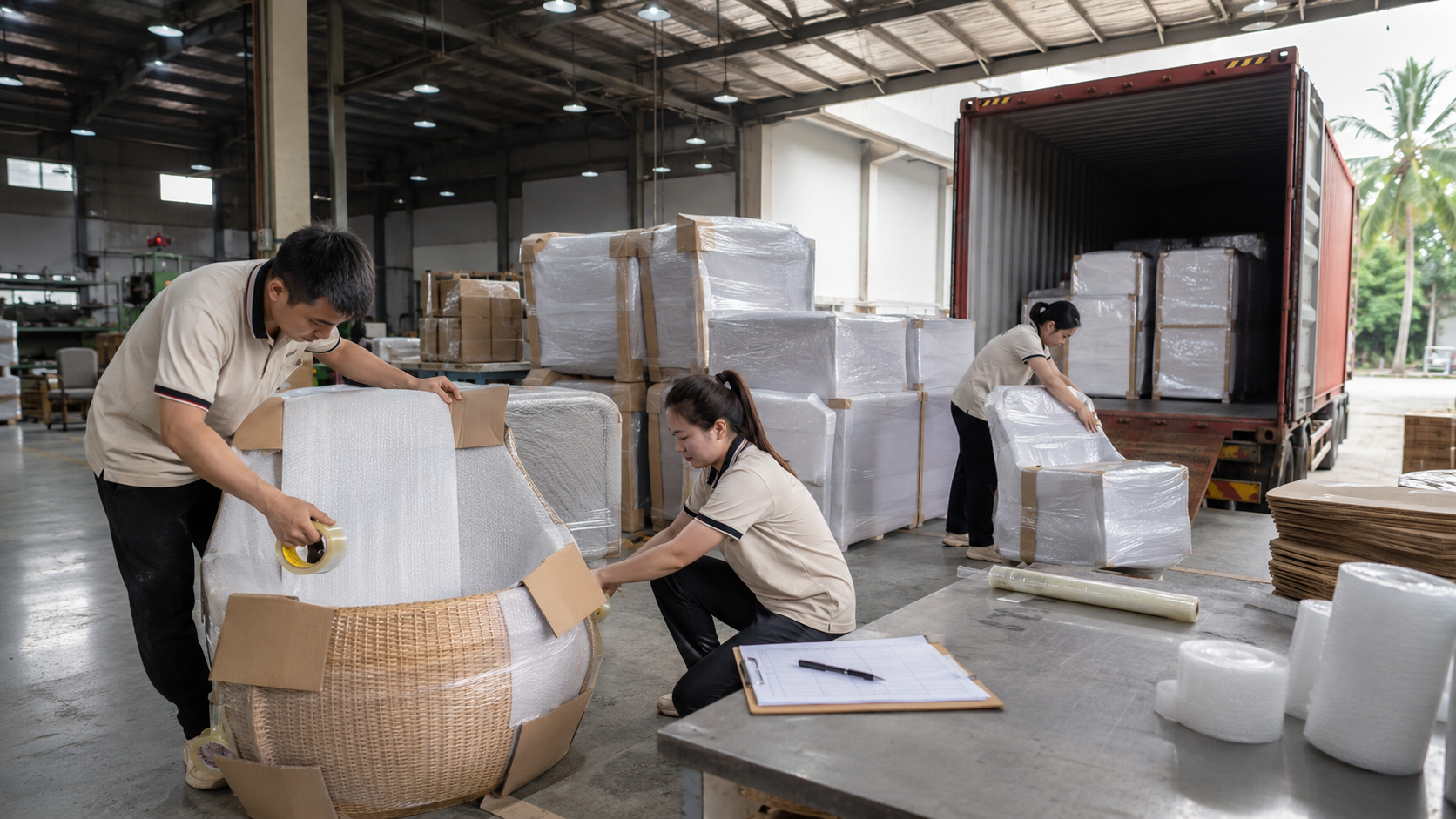
Container planning starts at the design stage, not after sample approval. This applies most directly to private label and custom programs, but even OEM buyers benefit from understanding how their selected models pack and ship.
The production model defines the structure of the program. The manufacturer determines whether the program delivers.
A manufacturer capable of operating across OEM, private label, and custom production demonstrates the depth, design literacy, and operational flexibility that long-term sourcing relationships require.
OEM, private label, and custom programs
Structure your next production program
Pham Lifestyles manages production through established factory partnerships across southern Vietnam, specializing in handcrafted rattan, wicker, bamboo, and all-weather synthetic fiber furniture for hospitality, retail, and brand programs. New York coordination throughout the production process.
Start a Conversation