How to Vet a Vietnamese Furniture Manufacturer: From Desktop Research to the Factory Floor
A quick search turns up hundreds of Vietnamese furniture manufacturers. The real work is determining which ones can deliver on quality, timelines, and paperwork before you commit to a purchase order.
Vietnam’s furniture export industry has a solid reputation: skilled workers, competitive costs, good access to materials, and growing production capacity concentrated in the southern manufacturing corridor. That same growth has also created a crowded market. Trading companies, brokers, and undercapitalized workshops sit alongside established manufacturers, all competing for the same inquiries.
The difference between a reliable production partner and an expensive sourcing mistake usually comes down to how carefully you evaluate the manufacturer before the first order. This guide walks through the full process in three stages: what to check before you reach out, what to look for during quoting, and what to assess on an in-person factory visit.
Phase One: Desktop Research
Desktop research helps you build a short list of credible candidates and filter out those that do not merit further attention.
Start with production identity, not price
Before you request a quote, confirm the company actually manufactures furniture. Vietnam’s export market includes many trading companies that present themselves as factories. They accept the order, farm the work out to smaller workshops, and add a markup. The buyer loses visibility into quality control, production schedules, and material sources.
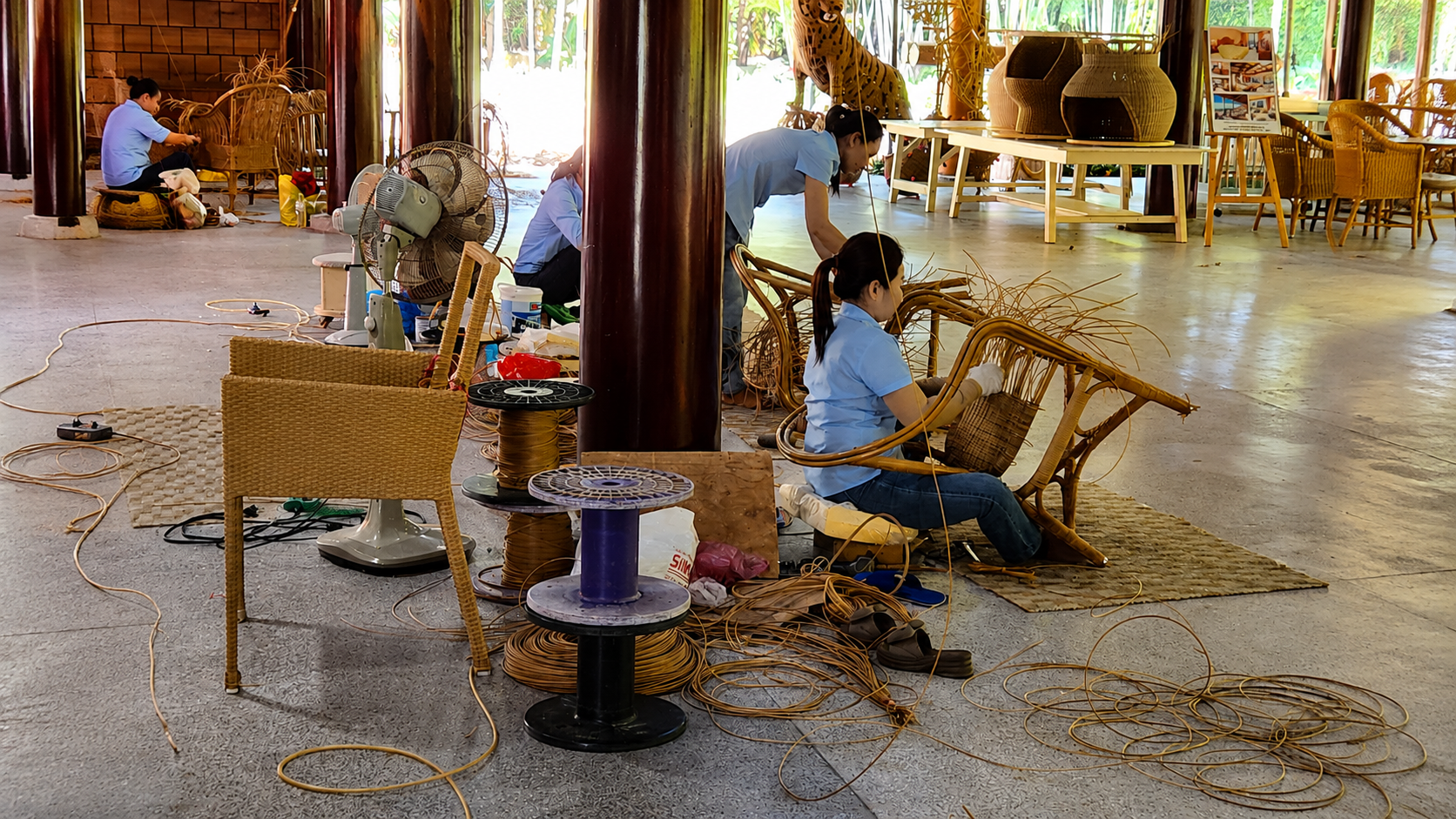
Signs of a genuine manufacturer include a physical factory address in a recognized industrial zone (Binh Duong, Dong Nai, Khanh Hoa, and the greater Ho Chi Minh City area are the main furniture-producing regions), production photos that show equipment and workers on the floor rather than only finished pieces in a showroom, a clear description of products by material and type, and an export track record with supporting documentation.
Check for category alignment
A factory that builds solid wood dining tables operates in a different environment than one that produces handcrafted rattan and wicker furniture. Materials, tools, skills, and quality processes differ substantially across categories. A manufacturer with real depth in one area will usually deliver more consistent quality and handle production issues better than a generalist claiming to handle every category.
For woven furniture (rattan, wicker, bamboo, all-weather synthetic fiber), look for evidence of skilled hand-weaving labor, frame construction capability in aluminum or steel, and finishing systems suited to the intended end-use environment.
Review export documentation language
A manufacturer prepared for international trade will speak comfortably about export packing, container loading, FOB or CIF terms, and standard documents such as packing lists, commercial invoices, and certificates of origin. If none of that language appears in their materials, the company may lack direct export experience.
Buyers targeting specific markets also need to consider the compliance and import requirements of each destination country. A factory that already ships to the buyer’s market will already understand those requirements.
Phase Two: First Contact and Quoting
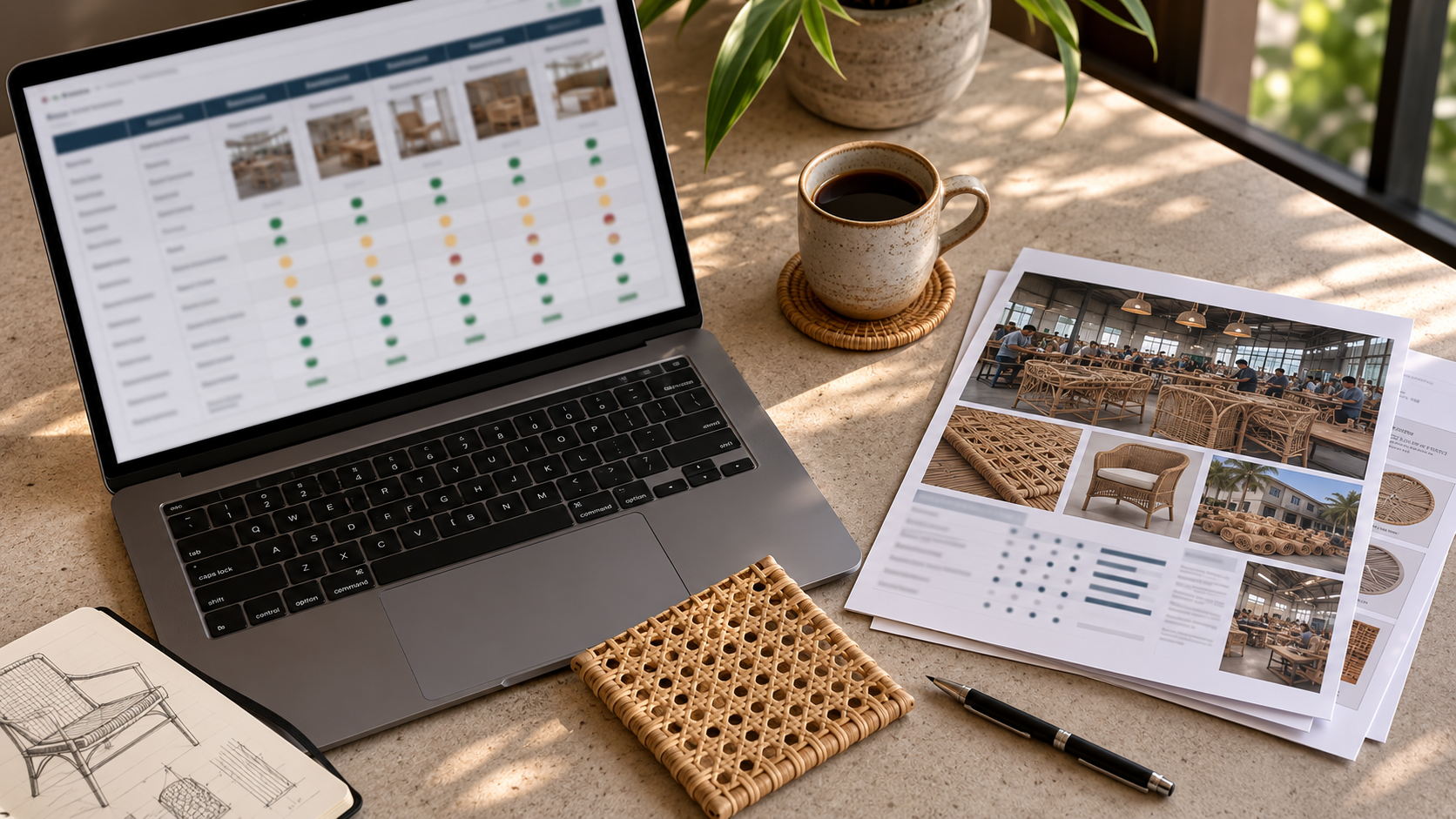
The quoting stage often reveals more about a manufacturer’s capability than any website or brochure. What the factory asks, how it structures the response, and the level of detail it provides all signal operational maturity.
Evaluate what they ask before they quote
A capable manufacturer will ask detailed questions before issuing pricing. Typical questions cover target quantities and order frequency, end-use environment (indoor, outdoor, commercial, residential), material preferences and finish requirements, delivery destination and preferred shipping terms, and any compliance or testing requirements specific to the buyer’s market.
A factory that quotes immediately without asking these questions is either working from a generic price list with little regard for actual requirements, or quoting low to win the business and planning later adjustments.
Look for specification language, not just pricing
A solid quote includes more than a unit price. It should reference material grades, frame specifications, weave patterns (for woven pieces), finish systems, packing method, and lead-time assumptions. It should also state clearly what the price includes and excludes.
For hospitality buyers, this level of detail matters. FF&E procurement standards demand thorough documentation at every stage. A manufacturer unable to produce a properly specified quote is likely to struggle with the paperwork that follows.
Substance in the response carries more weight than speed. A factory that takes 48 hours to deliver a detailed, accurate quote usually demonstrates greater capability than one that replies in two hours with a vague estimate.
Assess communication quality
Note whether the factory assigns a dedicated contact, whether that person understands the product from both a technical and commercial standpoint, and whether follow-up questions receive substantive answers.
Language ability is relevant but often overweighted. A factory with limited English, strong production capability, and a reliable bilingual project manager is usually a better choice than a fluent English speaker at a trading company without a real factory floor.
Phase Three: The Factory Visit
A factory visit remains the most reliable way to evaluate a manufacturer. Video calls and third-party audits can provide useful data, yet nothing replaces walking the production floor and observing operations in real time.
Before the visit: set expectations clearly
Request a full tour covering raw material storage, production stations, assembly, finishing, quality control, and packing. Give advance notice of the product categories under discussion so the factory can prepare relevant samples and demonstrate the appropriate processes. If the factory resists an open tour or attempts to limit access to certain areas, treat that resistance as useful information.
On the floor: what to observe
The physical environment of a factory often communicates more than any sales presentation.
Organization and flow. A well-run facility has a logical progression from raw materials to finished goods. Materials should be stored properly—rattan and bamboo are hygroscopic and require climate-appropriate storage to prevent cracking or mold. Work-in-progress should move through stations in an orderly sequence. A chaotic floor with finished goods stacked next to raw materials and no clear workflow often indicates inconsistent quality.
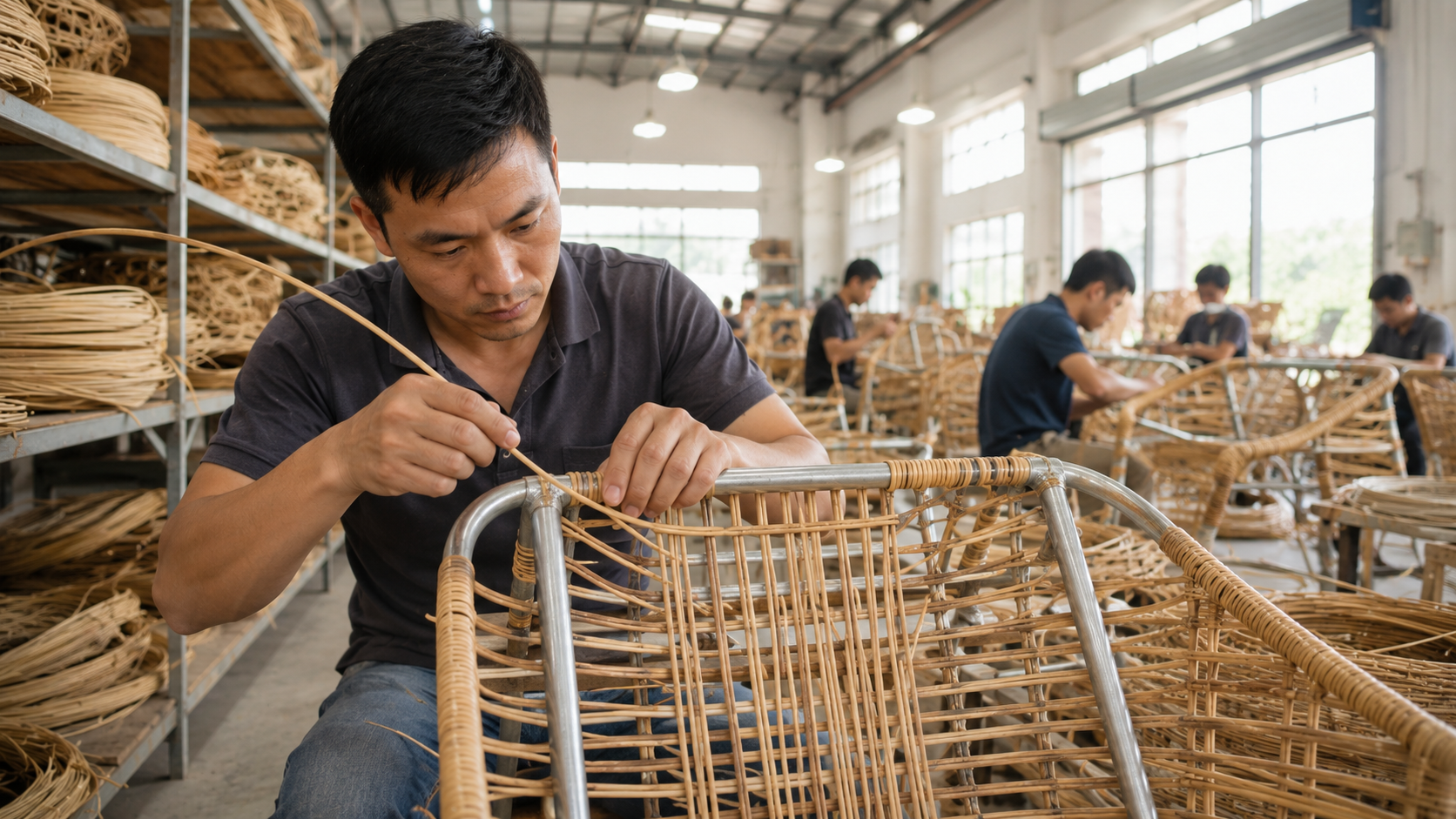
Workforce and skill level. For woven furniture, craftsmanship is the product. Watch the artisans work. Consistent tension, clean pattern transitions, and smooth joints between frame and weave are signs of experienced labor. If the workforce appears largely new or untrained, expect more variable quality and higher defect rates.
Frame construction. The frame determines structural integrity before any weaving begins. For aluminum frames, check weld quality and consistency. For wood or bamboo frames, examine joinery and finishing at the connection points. Ask whether the factory produces its own frames or outsources them. Outsourced frames do not automatically disqualify a supplier, yet the buyer should understand where structural responsibility resides.
Finishing systems. Finishes protect the product and define its appearance. For natural rattan and bamboo, ask about the process: sanding, sealing, staining, and topcoat. For outdoor and commercial hospitality applications, UV resistance and moisture protection are essential. The factory should be able to explain its approach with specifics rather than general statements.
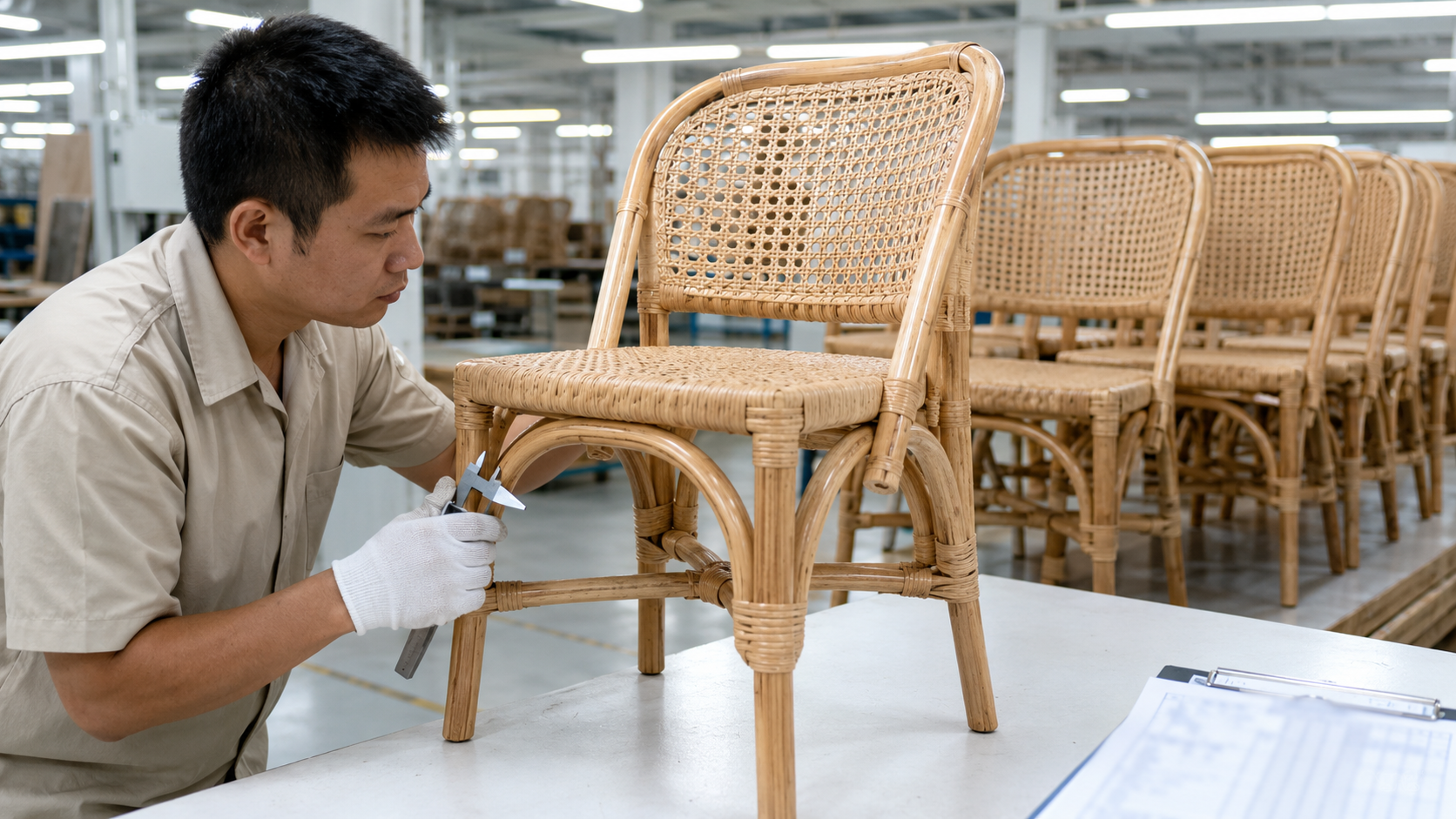
Quality control checkpoints. Look for dedicated QC stations between production stages, not only a final check at packing. A manufacturer that inspects only at the end accepts a higher defect rate and relies on sorting rather than prevention. In-line checks at frame welding, after weaving, and before finishing indicate a more mature quality system.
What to photograph
Document the raw material storage area, frame construction in progress, weaving stations, finishing area, quality control checkpoints, sample room, and packing area. Photograph any product samples relevant to the project under discussion. These photos serve as a useful baseline for later production conversations and make it easier to compare observations across multiple factory visits.
Questions that reveal operational depth
Beyond the tour, a few questions help separate serious manufacturers from marginal operators:
- What is the factory’s current production capacity, and how much of that capacity is already committed?
- How does the factory handle production delays or material shortages?
- What is the process for resolving a quality dispute after shipment?
- Can the factory provide references from current or recent international buyers?
- What testing or certification has been performed on the factory’s core products?
A manufacturer that answers these questions with specifics rather than generalities has usually faced real production challenges and built systems to manage them.
Red Flags That Should End the Conversation
Not every manufacturer deserves a second meeting. Certain patterns signal risk that negotiation will not resolve.
Showroom Without Production
A polished showroom with no adjacent production facility—or one located hours away—is a common sign of a trading company operating under a manufacturer identity.
Pricing Far Below Market
If a quote comes in dramatically below competitors for the same specification, the factory is either cutting material quality, underpaying labor, or quoting a price it does not intend to hold once the order is confirmed.
Resistance to Documentation
A manufacturer that hesitates to provide material certifications, test reports, or export documentation upon request is either unfamiliar with export requirements or unwilling to invest in compliance. Neither situation improves after an order is placed.
Inconsistent Answers About Capacity or Capability
If the sales team describes capabilities the factory floor does not support, or if different contacts give conflicting information about production processes, the organization lacks the internal alignment required for reliable output.
What a Strong Manufacturing Partner Looks Like
The best manufacturing relationships share a few common traits, regardless of product category or order volume.
The Common Thread
A strong partner maintains direct oversight of quality at every stage, whether through owned production or through established, long-term factory relationships managed on the buyer’s behalf. It communicates proactively, surfaces potential issues early, and provides documentation without being asked. It invests in factory relationships, workforce continuity, and finishing systems that match the quality expectations of the markets it serves.
For buyers sourcing woven furniture from Vietnam, a strong partner also demonstrates real material knowledge: the differences between natural rattan species, the structural properties of bamboo, and the performance of all-weather synthetic fiber across climates and commercial environments.
Pham Lifestyles manages production through established factory partnerships in southern Vietnam, including Nha Trang, Ho Chi Minh City, Binh Duong, and Dong Nai. The company specializes in handcrafted rattan, wicker, bamboo, and synthetic fiber furniture for hospitality, retail, and OEM programs, with a New York business presence that supports international buyer relationships directly. To learn more about production capabilities and how Pham Lifestyles works with international partners, visit the About page or reach out directly.
Pham Lifestyles
Ready to Evaluate a Manufacturing Partner?
Pham Lifestyles works directly with hospitality groups, OEM brands, and importers across the US, EU, and Australia. Start a conversation about production capabilities, lead times, and how the process works from inquiry to delivery.
Get in Touch