Nearshoring to Mexico has become one of the most discussed sourcing strategies among US furniture buyers, and for good reason.
Mexico sits a truck ride from the US border. Qualifying goods move under USMCA. Its furniture industry is large and established. For retailers, importers, and furniture brands reviewing their supply base, the question is no longer whether Mexico deserves a look. It is which products belong there and which do not.
This guide compares Vietnam and Mexico for furniture and hard home goods, with a focus on the categories where the answer is least obvious: handwoven rattan, bamboo, wicker, and all-weather synthetic fiber furniture, and the woven planters, baskets, and lighting that often sit alongside them in a collection. It covers the craft base in each country, labor content, freight, current US tariffs, and policy risk.
Should US Buyers Source Furniture from Vietnam or Mexico?
It depends on the product. Mexico suits bulky wood, metal, and upholstered furniture that benefits from truck freight, fast replenishment, and USMCA duty-free treatment. Vietnam remains the stronger source for handwoven rattan, bamboo, wicker, and synthetic fiber furniture and home goods, where weaving depth and material supply decide cost and quality more than transit time.
Many brands will end up using both. The useful question is which of a company's product lines sits on which side of that line.
What Nearshoring to Mexico Does Well
Mexico's advantages are real, and a fair comparison starts with them.
Proximity. Goods cross the border by truck in days rather than weeks on the ocean. For products that sell quickly or change often, that shortens replenishment cycles and reduces the inventory a retailer has to carry.
Duty treatment. USMCA-qualifying goods from Mexico are exempt from the new Section 301 duties that took effect on July 24, 2026. Goods that do not qualify pay 10%. Qualification depends on the product's rules of origin, which a licensed customs broker should confirm.
An established industry. Mexico's government counted more than 32,500 furniture manufacturing businesses in 2026, concentrated in Estado de México, Michoacán, and Jalisco. The industry is strongest in wood furniture, metal, upholstery, and contract seating.
Time zones and travel. Factory visits are a short flight, and the working day overlaps fully with US offices.
For a brand selling solid wood dining tables, upholstered sofas, or steel-framed outdoor pieces into US stores on a tight replenishment cycle, those advantages can outweigh most of what Asia offers.
Where the Case for Nearshoring Weakens
Handwoven furniture and home goods change the calculation in four ways.
1. The labor is in the weave
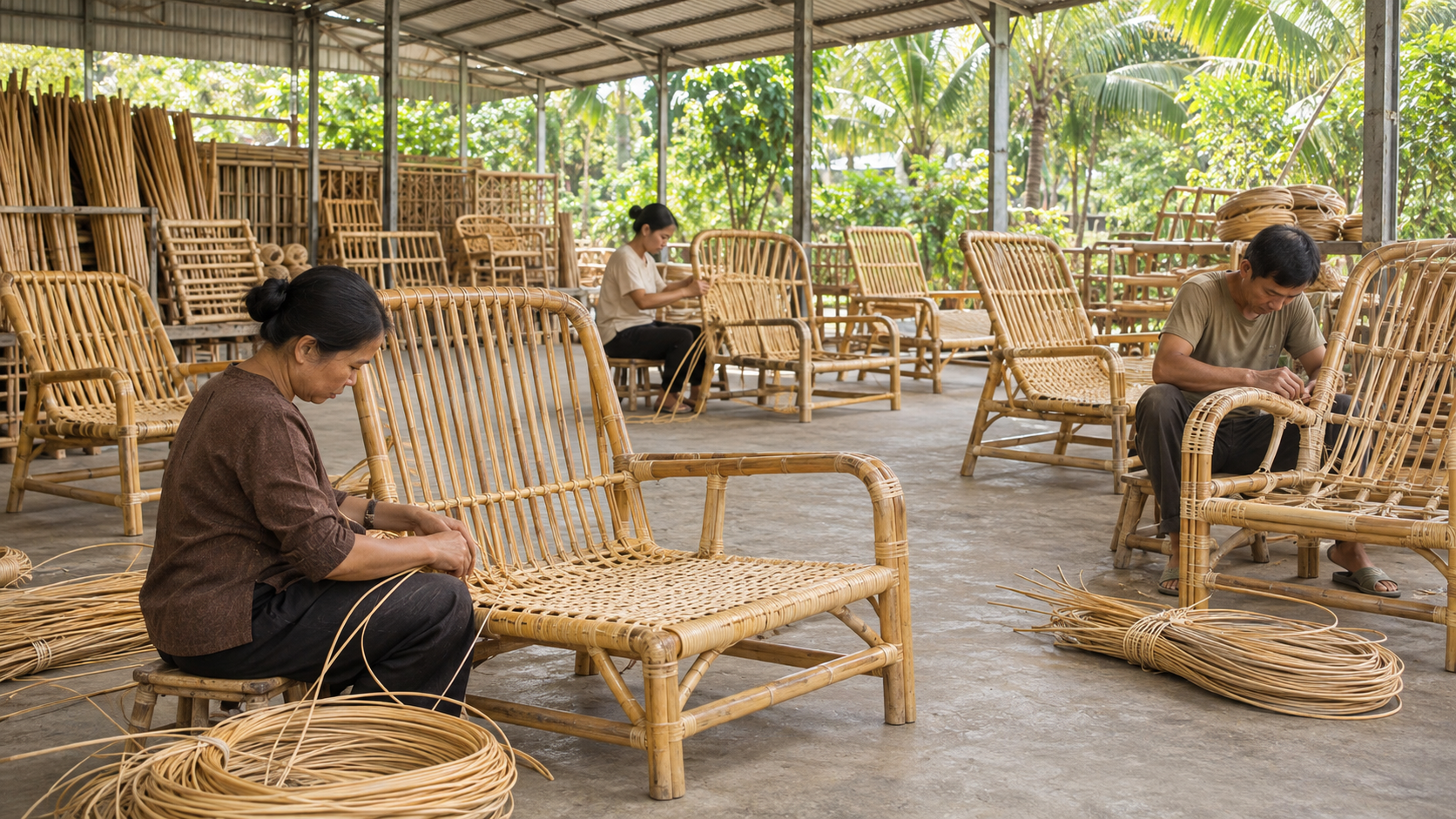
On a woven chair, planter, or pendant shade, the frame is a small part of the work. Most of the cost sits in weaving hours: wrapping, weaving, binding, and finishing by hand. The more handwork a product carries, the more the gap in labor rates between two countries compounds on every unit.
Mexico's average manufacturing wage was about $5.00 an hour in April 2026. Vietnam's manufacturing wages remain lower. For a machine-made product, that gap may be erased by freight and duty. For a product that is mostly handwork, it usually is not.
2. The craft base is deeper in Vietnam
Vietnam was the largest supplier of wooden furniture to the US in 2025, with wood product exports to the US of about $9.46 billion and more than 45% of US wooden furniture imports in the first eleven months of the year. Within that industry sits a mature weaving sector: rattan and bamboo workshops, synthetic fiber suppliers, and frame makers that have produced woven furniture for export for decades.
Mexico has its own respected weaving traditions, from palm and cane work to woven cord furniture. Far fewer Mexican suppliers, however, run handwoven rattan or synthetic fiber production at container scale, with the same weave, tension, and color held across thousands of units. For a retailer placing a full collection, that consistency is the product.
3. Freight is a small share of a woven program's schedule
Transit is Mexico's clearest advantage: days by truck against roughly three to five weeks by ocean from Vietnam to US ports. On a custom woven program, though, production decides most of the schedule, and production time depends on weaving capacity rather than geography. Our guide to custom furniture lead times compares Vietnam, Mexico, and China phase by phase.
For repeat orders of an established design, those ocean weeks can be planned into the buying calendar like any other fixed step.
4. Materials travel either way
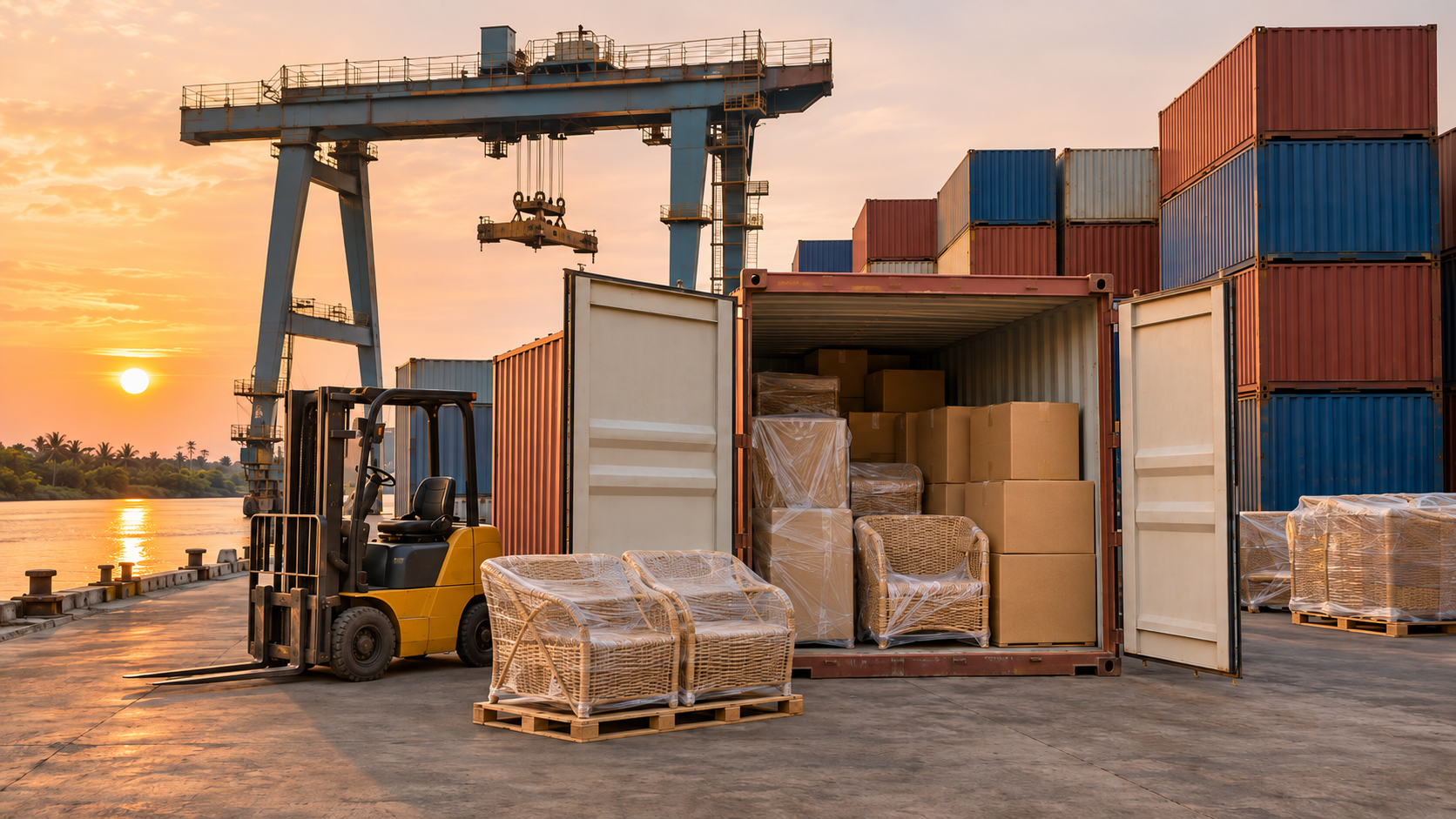
Natural rattan, bamboo, and the extruded synthetic fiber used in all-weather furniture are sourced and processed around Southeast Asia. A Mexican workshop building woven furniture at scale often has to import some of the same materials a Vietnamese workshop buys locally. That adds cost and lead time before weaving begins, and it can complicate USMCA qualification, which depends on where materials originate and how they are transformed.
Planters, Baskets, and Lighting Follow the Same Logic
The query that brings many buyers to this comparison asks about hard home goods, not furniture alone. For woven home goods, the case for Vietnam is often stronger still.
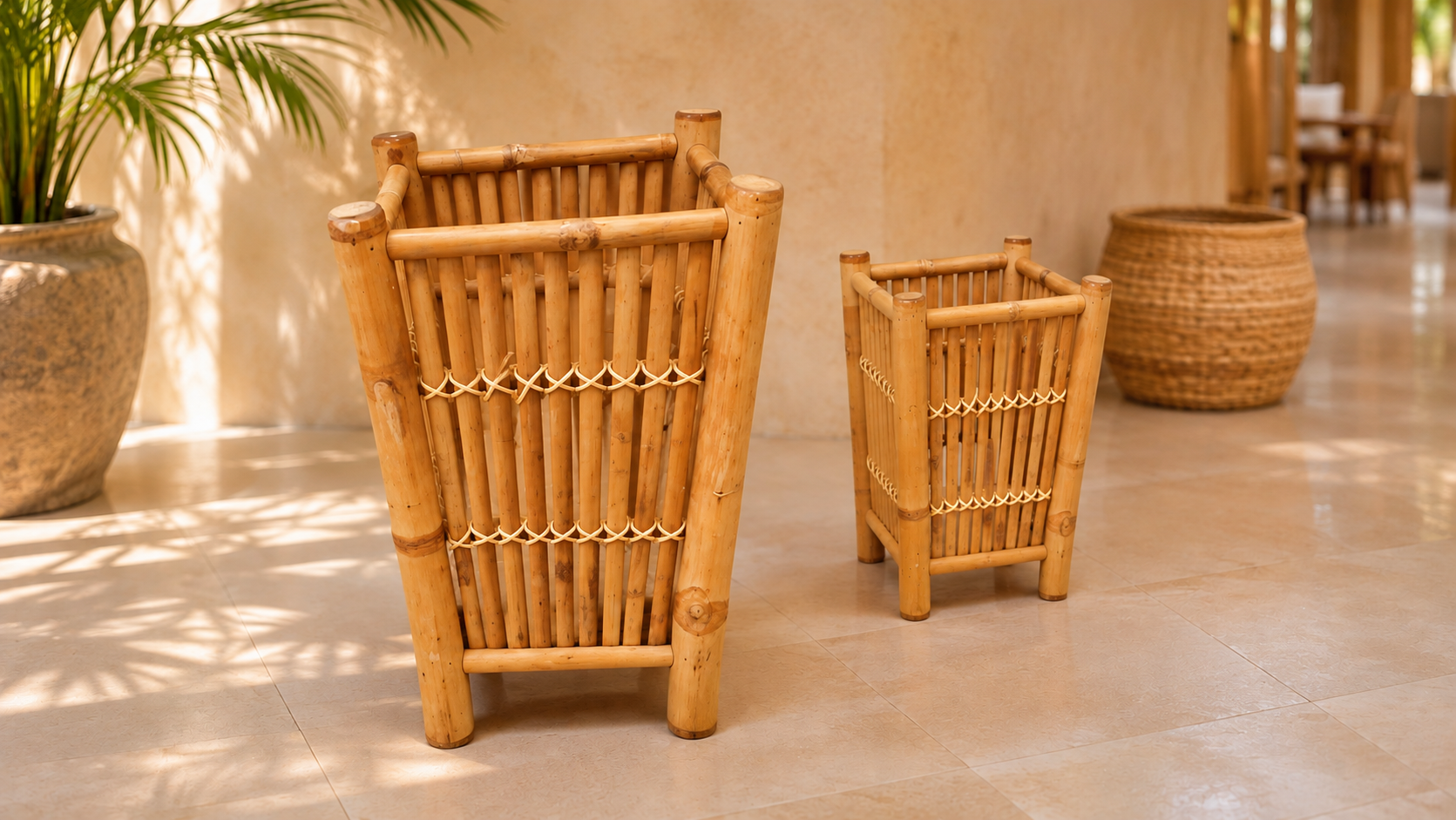
Planters, floor baskets, storage baskets, trays, and pendant shades are almost entirely handwork. They are light, so they rarely justify a container on their own, but they consolidate well with a furniture order. A retailer that sources woven furniture in Vietnam can add matching planters and lighting to the same production run, in the same material lot and finish, and ship them in the same container.
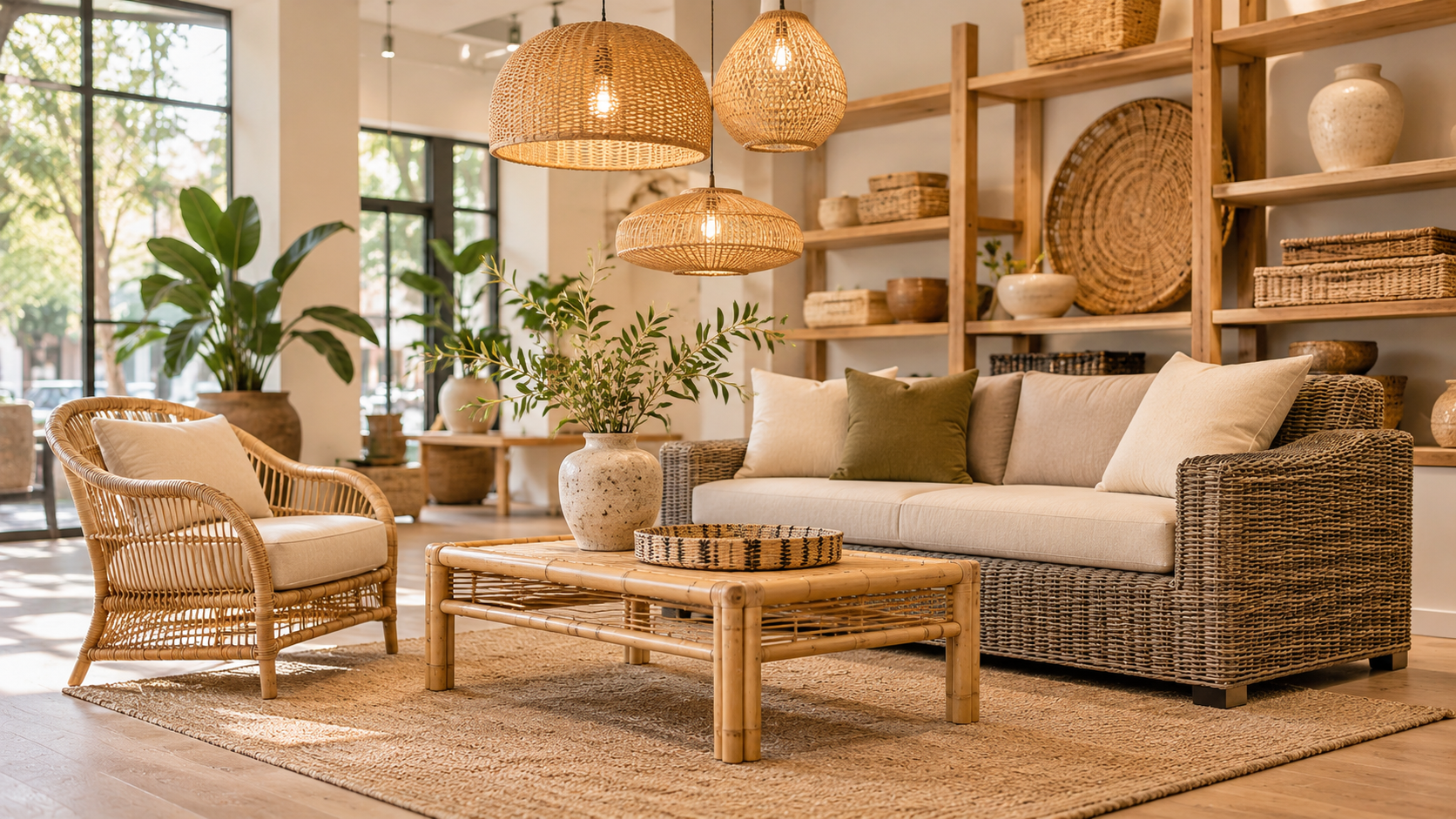
That keeps a collection visually consistent from the sofa to the pendant above it, which is difficult to achieve when furniture and accessories come from different countries and different suppliers. Our guide to rattan and bamboo accessories covers how these pieces are produced for retail and hospitality.
Vietnam and Mexico Compared by Factor
| Factor | Mexico | Vietnam |
|---|---|---|
| Transit to US | Days by truck | About 3 to 5 weeks by ocean |
| Additional US duty (Nov 2026) | 0% for USMCA-qualifying goods; 10% otherwise | 12.5% Section 301 on most goods |
| Strongest furniture categories | Wood furniture, metal, upholstery, contract seating | Wood furniture, handwoven rattan, bamboo, wicker, synthetic fiber |
| Woven production at container scale | Limited | Deep, established supplier base |
| Labor content advantage | Moderate | Strong on handwork-heavy products |
| Best order profile | Frequent, smaller replenishment orders | Planned programs and collections at container scale |
| Policy outlook | USMCA under annual review | Section 301 duty in place; further trade talks ongoing |
Upholstered wooden furniture is a separate case. It carries a 25% Section 232 tariff from both countries, scheduled to rise to 30% on January 1, 2027, and that tariff replaces the Section 301 duty rather than adding to it.
A Note on Casegoods and Hotel Programs
Hotel casegoods (headboards, desks, wardrobes, and similar built pieces) follow a different production path from woven furniture, and Mexico competes well for many of them. Pham Lifestyles does not produce casegoods, so this guide does not compare them in detail. For hospitality programs, a common pattern is to source casegoods and upholstery close to the property and source woven seating, lighting, and outdoor furniture from Vietnam. Our hotel furniture manufacturing page covers how those woven programs run.
How to Decide by Product Line
Retailers and furniture brands can usually sort their range with five questions:
- What share of the unit cost is handwork? The higher it is, the stronger Vietnam's case.
- How often does the product replenish? Fast-turning, frequently reordered items gain the most from truck freight. Planned seasonal collections gain the least.
- Can the product qualify under USMCA? If it cannot, Mexico's duty advantage over Vietnam narrows to 2.5 percentage points.
- Does the order reach container scale? Woven programs from Vietnam work best when furniture, lighting, and accessories are planned together into full containers.
- Does the collection need to match? A range that pairs woven seating with woven lighting and baskets is easier to keep consistent with one production partner.
Brands that answer these honestly often find a split strategy: Mexico for casegoods, upholstery, and fast-moving wood and metal items, and Vietnam for woven collections. Our guide to vetting a Vietnam furniture manufacturer covers what to check before placing a first order.
Where Things Stand: US Tariffs on Vietnam and Mexico (November 2026)
US trade policy has changed several times since early 2025. As of November 18, 2026:
- IEEPA tariffs ended. On February 20, 2026, the Supreme Court ruled in Learning Resources v. Trump that IEEPA does not authorize tariffs. That ended the 2025 reciprocal tariffs on Vietnam and the IEEPA tariffs on Mexico.
- Section 122 expired. A temporary 10% global surcharge applied from February 24 to July 24, 2026.
- Section 301 forced labor duties replaced it. Since July 24, 2026, products of 60 economies pay an additional 10% or 12.5%. Vietnam is in the 12.5% tier. Mexico is in the 10% tier, and USMCA-qualifying goods from Mexico are exempt.
- Section 232 still applies to upholstered wooden furniture at 25% from most countries, including Vietnam and Mexico, with an increase to 30% scheduled for January 1, 2027. Goods covered by Section 232 are not also charged the Section 301 forced labor duty.
- USMCA remains in force, but under review. At the July 1, 2026 joint review, the US declined to renew the agreement in its current form. The agreement continues, now with annual reviews.
Normal MFN duties apply on top of these, and they vary by HTS code. Classification for woven furniture depends on the frame, the weaving material, and whether upholstery is fixed. Our guide to importing furniture from Vietnam covers landed cost planning, and a licensed US customs broker should confirm the classification and duty for each item.
Working with Pham Lifestyles
Pham Lifestyles produces handcrafted rattan, bamboo, wicker, and all-weather synthetic fiber furniture, along with woven lighting, planters, and accessories, through established factory partnerships in Nha Trang, Ho Chi Minh City, Binh Duong, and Dong Nai. Production is managed with direct oversight, and our commercial team works from New York.
We work best with retailers, importers, furniture brands, and hospitality groups planning woven collections and programs at container scale. Some of the buyers who come to us for woven lighting and furniture operate in Mexico themselves, which says a good deal about where program-scale handweaving sits today.
See What We Make for the categories we produce, learn how our sourcing support works, or contact our team to discuss a woven collection or program.
Weighing Vietnam against nearshoring
Sort the range by product line first
Share the categories under review, annual volumes, and replenishment pattern, and our team will outline which woven lines make sense to produce in Vietnam and how they would ship.
Start a Conversation