Synthetic Fiber vs. Natural Rattan for Hospitality: Choosing by Climate, Use Case, and Lifecycle Cost
Every hospitality project with outdoor or semi-outdoor zones faces a material choice between natural rattan and all-weather synthetic fiber. The right selection depends on where the furniture sits, what it will be exposed to, and how the property plans to maintain it over a full replacement cycle.
Both materials are legitimate for commercial use. Both are manufactured at scale across Vietnam’s southern production corridor. In many cases, the same factory partners produce furniture in both materials, using overlapping labor and finishing infrastructure.
The decision comes down to exposure, climate, guest experience goals, and lifecycle economics. A resort lobby and a poolside lounge bar present different material demands, even when they share the same property and the same design language.
This guide covers the practical tradeoffs between natural rattan and all-weather synthetic fiber for hospitality buyers, interior designers, and FF&E specifiers working with Vietnamese furniture manufacturers. The aim is to help procurement teams make a more informed specification decision based on climate, property zoning, and total cost of ownership.
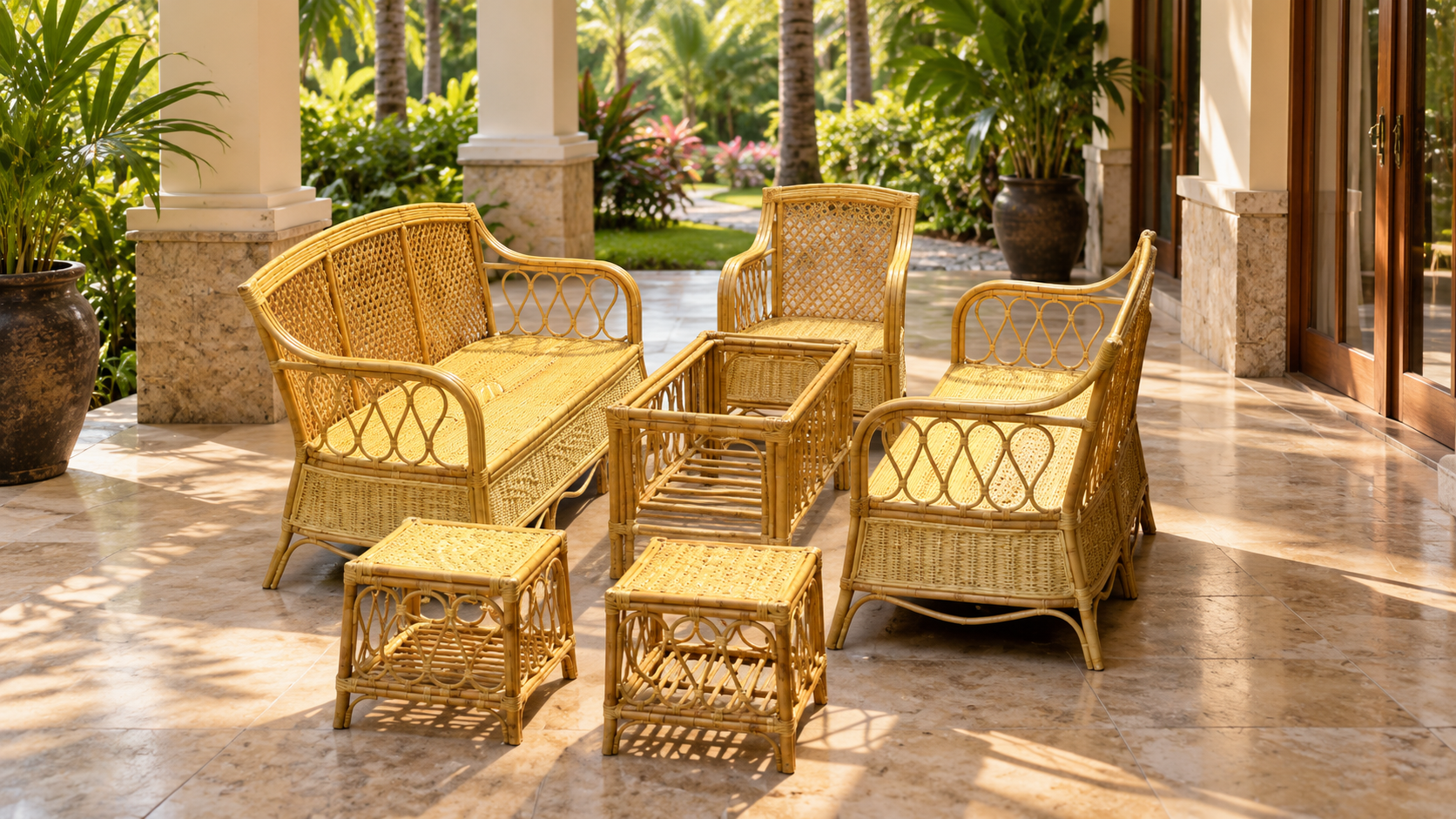
Natural rattan seating on a covered terrace. The material’s warmth and grain variation give each piece a character that synthetic fiber does not replicate.
Natural Rattan: Where It Excels
Rattan is a climbing palm harvested from tropical forests across Southeast Asia, with Vietnam among the largest producers and processors. The raw cane is cleaned, dried, steamed, and bent into frames or split into weaving strands by skilled artisans. It is one of the oldest and most refined furniture materials in the region, and the depth of Vietnamese craftsmanship in woven furniture is a significant part of what gives the material its commercial appeal.
Natural rattan delivers warmth, tactile richness, and visual character that synthetic materials do not match. Each piece carries subtle variation in tone, grain, and surface texture. For buyers furnishing hotel lobbies, indoor restaurants, covered terraces, and boutique interiors, that organic quality is often the design intent.
Where natural rattan performs best:
- Indoor dining rooms, lobbies, and lounge spaces
- Covered verandas and terraces with limited direct weather exposure
- Boutique hotels and lifestyle properties where material authenticity drives the guest experience
- Design-forward retail environments and showrooms
What to plan for:
Natural rattan responds to its environment. Prolonged exposure to direct rain, standing water, or sustained high humidity can cause swelling, softening, or mold. Intense UV exposure fades and dries the material over time. In covered, well-ventilated indoor or semi-outdoor settings, natural rattan furniture holds up well for years with periodic cleaning and refinishing. In fully exposed outdoor applications, the maintenance burden increases and the replacement cycle shortens.
Natural rattan is durable when specified for the environments where it belongs. A covered terrace overlooking a garden is a strong application. An uncovered pool deck in coastal Queensland is not.

Aluminum frame fabrication for woven furniture. The same frame infrastructure supports both natural rattan and all-weather synthetic fiber production.
All-Weather Synthetic Fiber: Where It Excels
All-weather synthetic fiber is a category of extruded polymer material, most commonly high-density polyethylene (HDPE), designed to replicate the woven appearance of natural rattan or wicker while withstanding direct outdoor exposure. The fiber is woven by hand onto aluminum or powder-coated steel frames, using many of the same weaving techniques applied to natural rattan. In Vietnam’s furniture manufacturing sector, the same artisans who weave natural rattan frequently work with synthetic fiber as well.
The resulting furniture is engineered for performance in exposed commercial environments. Quality synthetic fiber resists UV degradation, moisture absorption, salt corrosion, and temperature cycling without the maintenance demands of natural materials. For hospitality FF&E programs furnishing high-exposure outdoor zones, synthetic fiber is often the baseline specification.
Where synthetic fiber performs best:
- Pool decks, beach clubs, and open-air bars
- Uncovered rooftop terraces and dining patios
- Coastal resorts with sustained salt air exposure
- High-turnover food and beverage environments where frequent cleaning is standard
- Any outdoor zone where the furniture will remain exposed year-round
What to plan for:
Synthetic fiber quality varies by grade. Premium HDPE fiber from established producers holds color and structural integrity for years under direct sun. Lower-grade PVC or recycled polymer blends can become brittle, fade unevenly, or crack within a single season. The frame is as important as the weave. Aluminum frames with quality powder coating handle salt air and moisture far better than uncoated steel, which will corrode at joints and connection points.
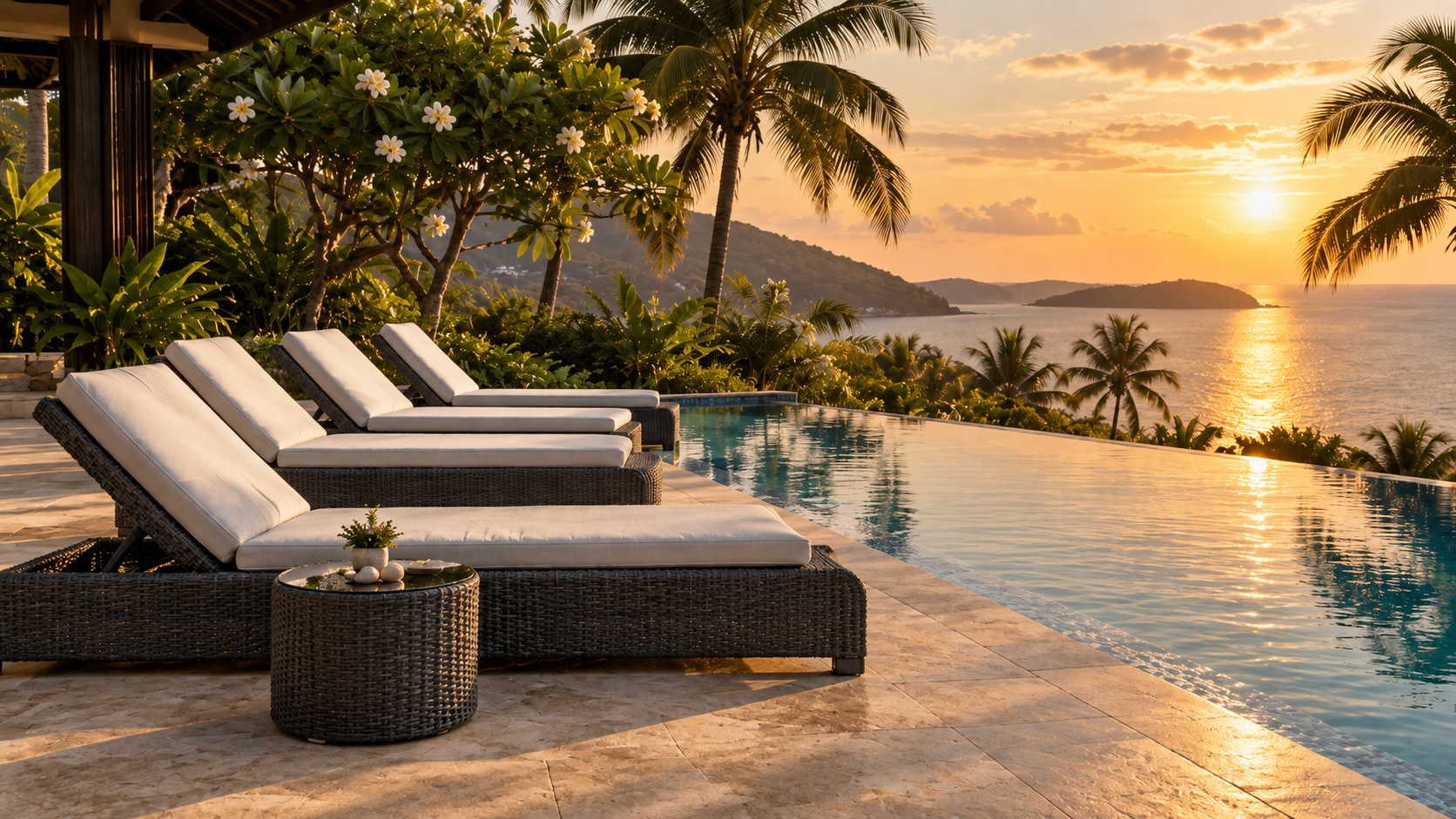
All-weather synthetic fiber lounge seating on a resort pool deck. HDPE fiber woven onto aluminum frames handles chlorinated water, sunscreen, direct UV, and daily cleaning.
Choosing by Climate Zone
Climate is the first filter. The more useful question is how exposed the furniture will be.
A covered courtyard in Bali and a covered courtyard in Lisbon present similar material conditions, even though the regional climates differ. An uncovered rooftop in Miami and an uncovered terrace in Brisbane share more in common than either shares with a covered lobby in the same building.
Certain climate patterns still push the decision in a clear direction.
Tropical and subtropical coastal (Southeast Asia, Caribbean, Gulf Coast, Northern Australia, Pacific Islands): High UV, monsoon-level rain, salt air, and sustained humidity. Synthetic fiber on aluminum frames is the default for any exposed or semi-exposed zone. Natural rattan works in covered, ventilated interiors.
Mediterranean and temperate coastal (Southern Europe, Southern California, parts of Australia’s south coast): Lower humidity than tropical zones, but intense seasonal UV and salt air on coastal properties. Synthetic fiber for exposed terraces and pool areas. Natural rattan for covered dining and lounge spaces, particularly where the design brief calls for warmth and texture.
Temperate and seasonal (Northern US, Northern Europe, Japan): Outdoor furniture seasons are shorter, and most pieces are stored or covered during off-months. Either material works for covered outdoor dining. For fully exposed patio seating used seasonally, synthetic fiber handles the rain-and-store cycle with less maintenance between seasons.
Arid and high-altitude (desert climates, mountain resorts): UV intensity is the primary concern. Synthetic fiber handles sustained UV better than untreated natural rattan. Natural rattan can work in shaded outdoor areas with UV-protective finishing.
The covered-versus-exposed distinction carries more weight than the geographic location itself.
Choosing by Property Zone
Beyond climate, the specific zone within a property shapes the material decision. Most hospitality projects specify different materials for different areas based on exposure, guest experience goals, and maintenance logistics.
Pool deck and beach: Synthetic fiber. Chlorinated water, sunscreen, wet swimwear, and direct sun are constant. The furniture will be hosed down regularly. Natural rattan does not belong in this environment.
Open-air restaurant and bar: Synthetic fiber for fully exposed seating. Either material for covered seating, depending on the design direction and the property’s willingness to maintain natural rattan.
Covered terrace and veranda: Both materials work structurally. Natural rattan brings warmth and material authenticity. Synthetic fiber brings lower maintenance. The choice depends on the intended feel of the space.
Indoor lobby, lounge, and spa: Natural rattan’s visual warmth and tactile character are a clear advantage in these settings. The material contributes to the atmosphere in a way that synthetic fiber does not. Maintenance is minimal in a controlled indoor environment.
High-turnover food and beverage: Even indoors, synthetic fiber is sometimes preferred for fast-casual dining environments where furniture is cleaned multiple times per day and heavy use wears surfaces faster. For formal dining rooms where the furniture contributes to the room’s identity, natural rattan is the stronger choice.
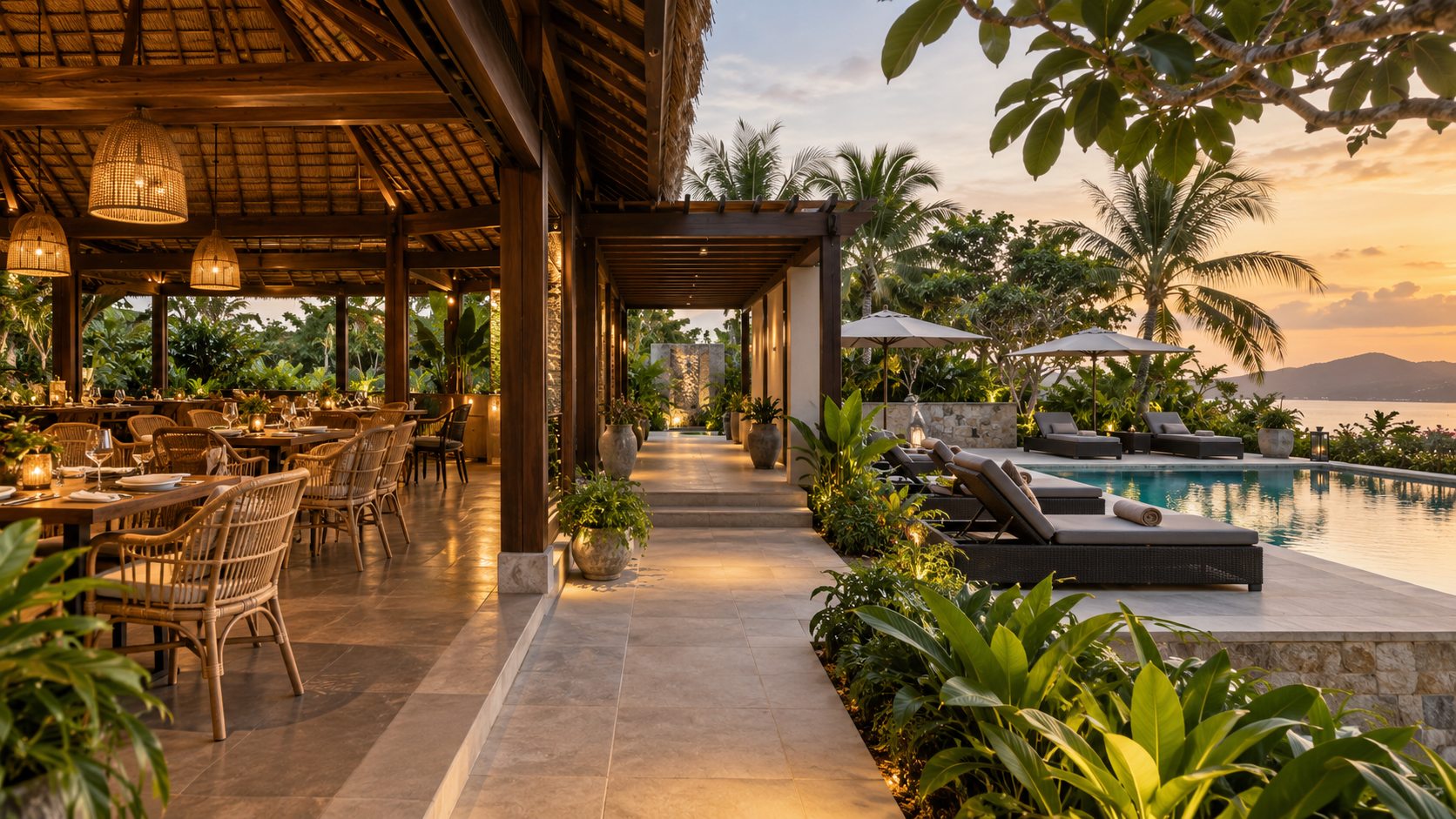
Different zones of a hospitality property call for different material specifications. Covered dining areas often favor natural rattan for warmth, while exposed outdoor zones use synthetic fiber for weather resistance.
Lifecycle Cost: Beyond the Unit Price
The procurement cost per unit tells only part of the story. For hospitality buyers evaluating total cost of ownership over a five-to-seven-year furniture cycle, the relevant comparison includes maintenance, refinishing, and replacement timing.
Natural Rattan
Lower per-unit production cost. Simpler frame construction (rattan or wood). Periodic refinishing required for outdoor or semi-outdoor use. Replacement cycles shorter in exposed environments. In well-maintained indoor settings, natural rattan furniture lasts well beyond a single procurement cycle.
Synthetic Fiber
Higher upfront cost (aluminum frame, powder coating, quality HDPE fiber). Minimal maintenance: basic cleaning only. Material holds up through multiple seasons of direct outdoor exposure without structural degradation. Total cost of ownership over five years often favors synthetic fiber in high-exposure applications.
The math shifts further when factoring in labor. A property that needs to refinish 200 natural rattan dining chairs annually absorbs a recurring cost that compounds over the life of the program. A property running synthetic fiber in those same positions absorbs only cleaning labor.
Neither material is universally cheaper. The cost comparison depends on where the furniture sits, how it will be maintained, and how long the property expects to run the program before the next refresh.
Working with a Manufacturer on Both Materials
One practical advantage of sourcing woven furniture from Vietnam is that most established manufacturers produce both natural rattan and synthetic fiber products, often in the same facility. The weaving skills are transferable. The frame fabrication, finishing, and quality control infrastructure overlaps.
For hospitality buyers specifying different materials across different property zones, this means a single production partner can manage the entire program. Finishes can be coordinated across material types. Sampling, quality control, and production timelines can be managed under one relationship rather than split across multiple suppliers.
This is especially valuable in OEM and private label programs where design continuity across a property is a priority. A dining chair in natural rattan for the indoor restaurant and a lounge chair in synthetic fiber for the pool terrace can share the same design language, the same frame geometry, and the same finish palette, even though the materials are different.
Vietnam Furniture Manufacturing
Natural Rattan and Synthetic Fiber from One Production Network
Pham Lifestyles coordinates production in both natural rattan and all-weather synthetic fiber through established factory partnerships across Vietnam’s southern manufacturing regions. For buyers evaluating material options for an upcoming hospitality or commercial program, the conversation starts here.
Start a Conversation