Outdoor Furniture for Hotels and Resorts: UV Resistance, Salt Air, Frame Construction, and Warranty Terms
Outdoor hospitality furniture fails for predictable, preventable reasons. UV degradation, corroded frames, faded weave, waterlogged cushions, and cracked powder coating stem from specification gaps that can be closed before production begins.
For hospitality groups furnishing pool decks, beachfront terraces, rooftop bars, and garden dining areas, the specification decisions made during procurement often determine performance more than the unit price on the quote. A well-specified piece holds up through years of constant use in demanding climates. A poorly specified piece may look right on delivery day and begin deteriorating within months.
This guide covers the technical checkpoints that procurement teams, designers, and FF&E specifiers should address with any outdoor furniture manufacturer. If the decision between natural rattan and all-weather synthetic fiber remains open, our material comparison guide covers that choice in detail. This article continues from that point: once the material direction is set, here is how to specify it for real commercial outdoor environments.
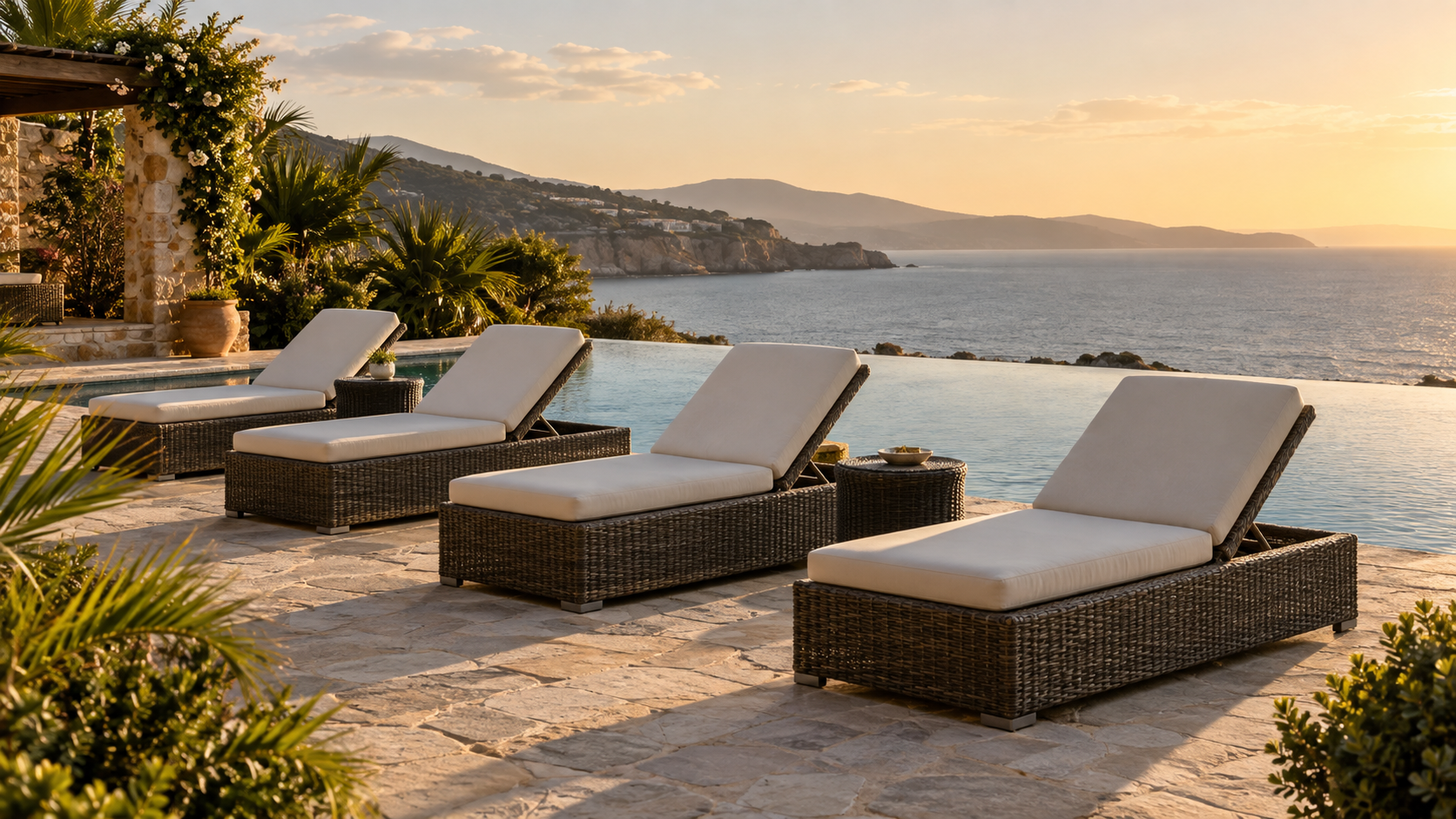
Frame Construction: The Structure Under the Weave
The frame is the skeleton of any piece of outdoor furniture. It carries the structural load, anchors the weave, and determines how long the piece will last in a commercial environment. In outdoor hospitality settings, frame failure is the most common reason furniture gets replaced early.
Material
Aluminum is the standard for commercial outdoor furniture frames. It resists corrosion naturally, weighs significantly less than steel (an advantage for housekeeping staff who move furniture daily), and accepts powder coating well. For most hospitality applications, aluminum is the appropriate choice.
Steel frames are occasionally specified for heavy-use applications where rigidity takes priority over weight. Steel requires more aggressive corrosion protection, which adds cost and ongoing maintenance. Iron is rarely used in modern commercial outdoor furniture.
Wall thickness
Frame wall thickness is one of the most important numbers on a specification sheet, and one of the numbers most often left off. It directly determines how much load the piece can carry and how long it will hold its shape under constant use.
For dining chairs and lightweight seating: 1.2mm minimum wall thickness. For loungers, daybeds, sofas, and any piece that bears reclining body weight: 1.5mm or thicker. Anything below 1.0mm is residential grade, regardless of how the supplier describes it.
Ask the manufacturer to state the wall thickness on the spec sheet. If they cannot or will not provide this number, treat that as useful information.
Weld quality
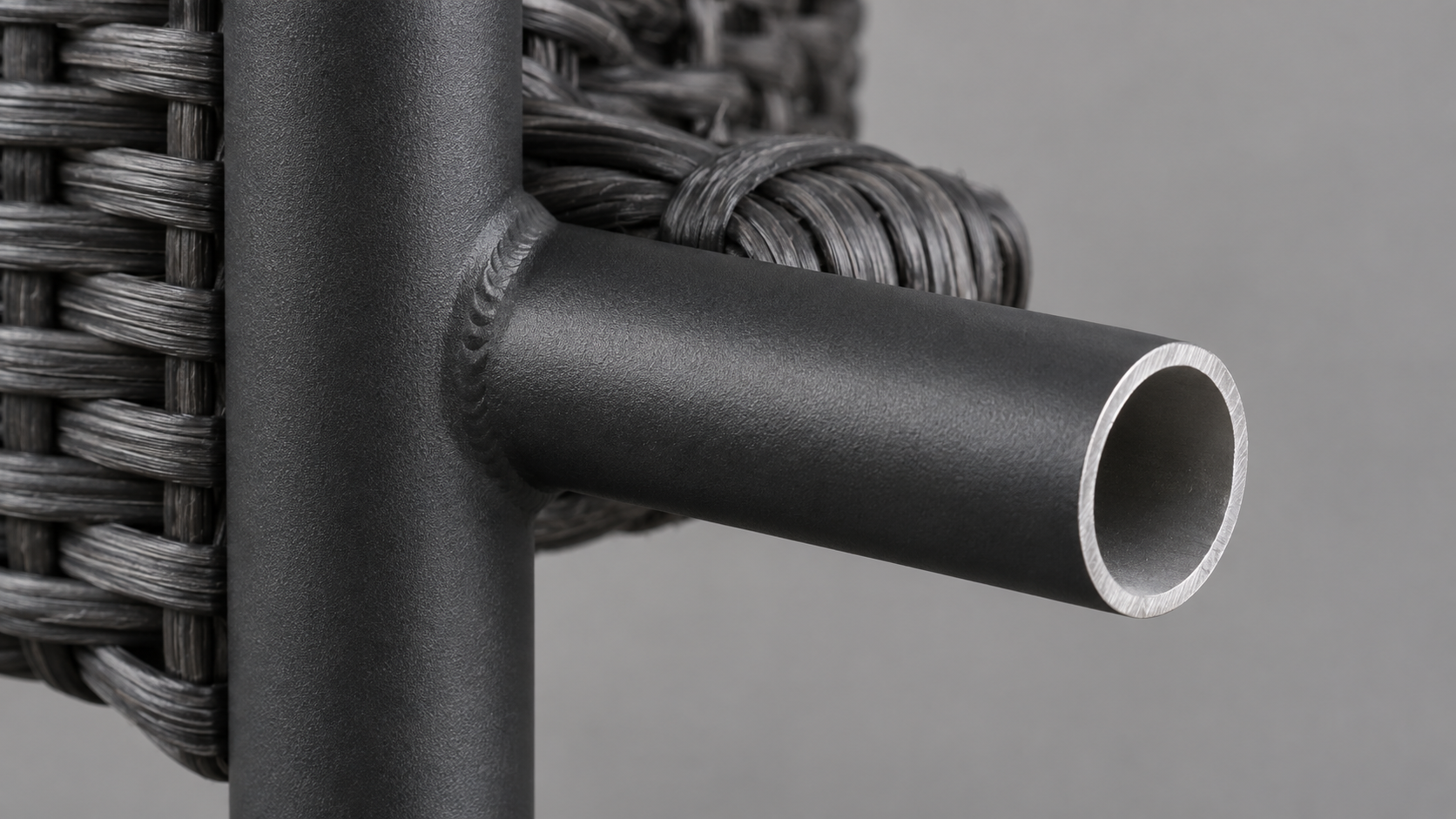
Joints are where outdoor frames fail. Look for full MIG or TIG welds at every joint, ground smooth and coated with the same powder finish as the rest of the frame. Cold joints, where tubes are crimped or press-fit rather than welded, have no place in commercial outdoor furniture.
On a production sample, inspect the welds visually. They should be consistent, fully fused, and free of pinholes or gaps. Weld quality is also a reliable indicator of overall factory quality: the same attention that produces clean welds tends to produce clean work throughout the production line.
Powder Coating: More Than Just Color
Powder coating protects the frame from corrosion, UV damage, and physical wear. The quality of the powder coat system has a direct impact on how the furniture ages in outdoor commercial environments.
Layer thickness
A good commercial powder coat runs 60 to 80 microns in a single layer. For high-exposure applications (poolside, beachfront, rooftop with no shade structure), a two-coat system at 80 to 120 microns total provides significantly better protection. Ask the manufacturer what thickness they apply and whether they measure it with a coating gauge during production.
Pre-treatment
The step before the powder goes on is as important as the powder itself. Proper pre-treatment includes chemical cleaning to remove oils and residue, followed by a conversion coating (phosphate or chromate-free alternatives) that helps the powder adhere to the metal. Without proper pre-treatment, even a thick powder coat will peel under stress.
Some manufacturers sandblast the frame before coating, which provides a strong mechanical bond. This adds cost but improves adhesion in demanding environments.
UV-stable pigments
Not all powder coat colors perform equally in direct sunlight. Lighter colors (white, cream, light gray) tend to hold up better than dark colors, which absorb more heat and UV energy. If the project calls for dark frame colors in a high-UV environment, confirm that the powder uses UV-stable pigments rated for outdoor exposure. Fading within the first 12 to 18 months is almost always a pigment quality issue.
Salt spray testing
For any coastal or near-coastal installation, ask whether the powder coat system has been tested for salt spray resistance. Testing is measured in hours of continuous exposure: 500 hours is a common baseline for outdoor residential use, while 1,000 hours or more is appropriate for commercial coastal environments. The manufacturer should be able to provide test documentation or at minimum state the rated performance level.
UV Resistance in the Weave Material
If the material decision has already been made in favor of all-weather synthetic fiber (covered in detail in the material comparison guide), the next specification step is confirming the UV protection level of that specific fiber.
UV stabilizers
Quality synthetic fiber for outdoor furniture contains UV stabilizers blended into the resin during extrusion. This differs from a UV coating applied to the surface after production. Stabilizers integrated into the material itself provide protection throughout the full cross-section of the fiber, so the protection does not wear away with surface abrasion or cleaning.
Ask the manufacturer whether the UV protection is through-body (blended into the resin) or surface-applied. Through-body stabilization is the standard for any commercial outdoor application.
Color retention
In high-UV environments (Mediterranean, Gulf, Southeast Asia, Australia, the Caribbean), expect some color shift over time even with stabilized fiber. The question is how much and how fast. Quality fiber should maintain its color for a minimum of two to three years of continuous outdoor exposure in direct sunlight. Accelerated weathering tests (using xenon arc or fluorescent UV lamps) provide a standardized way to compare fiber performance across suppliers. Ask whether the fiber supplier can provide accelerated weathering data.
Salt Air and Coastal Environments
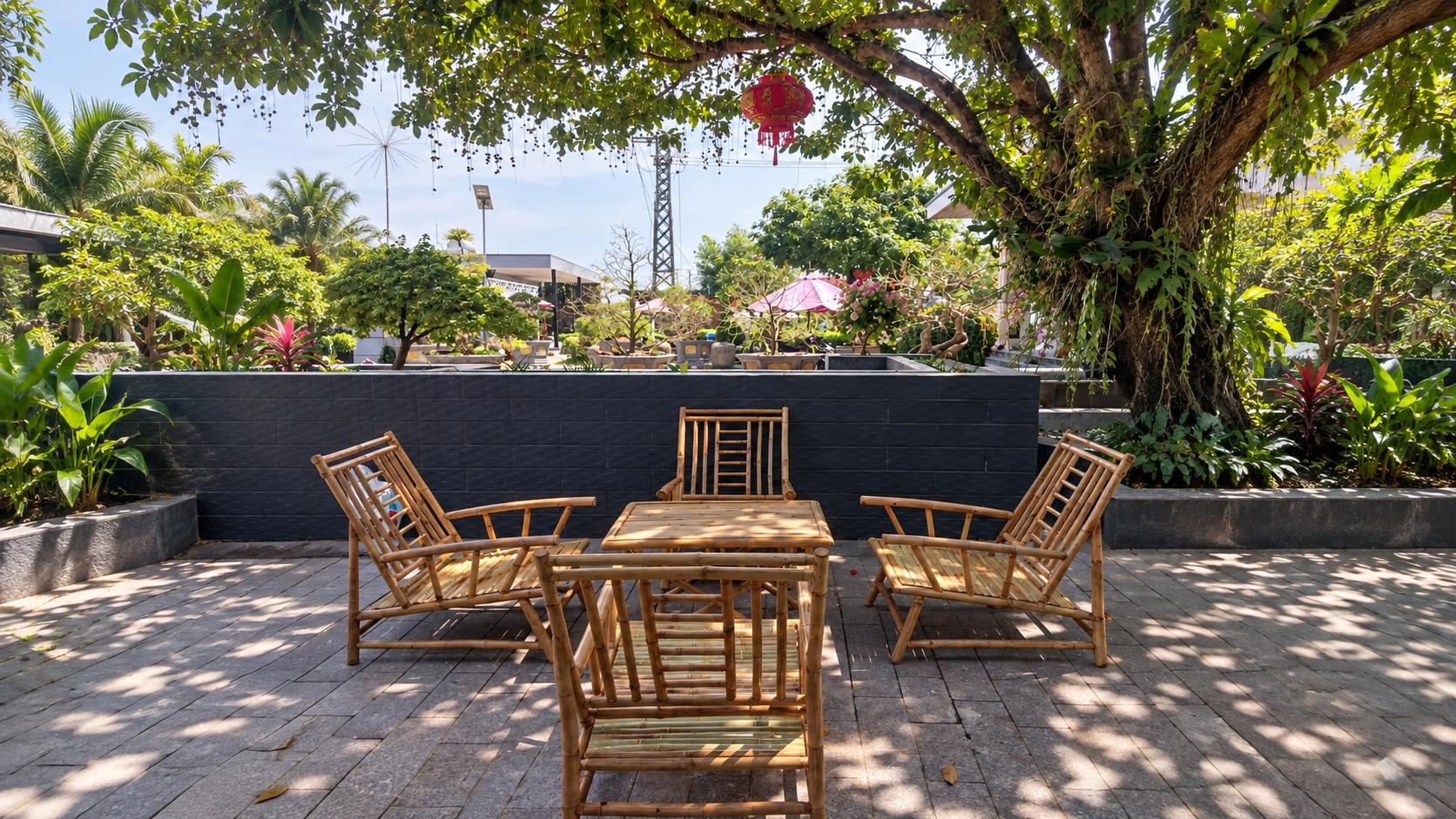
Coastal installations demand the highest specification level. Salt accelerates corrosion in metal components, degrades unprotected coatings, and can affect the flexibility of woven fibers over time. Furniture specified for a beachfront resort needs different engineering than furniture specified for a landlocked property.
Metal components
Every metal component exposed to salt air needs protection. This includes the frame as well as screws, brackets, connectors, levelers, and any internal hardware. Stainless steel hardware (grade 304 minimum, grade 316 for direct oceanfront installations) should be specified for all fasteners and connectors. Standard zinc-plated hardware will corrode within months in a salt environment.
Frame drainage
Hollow aluminum frames can trap water if they are not designed with drainage in mind. Weep holes (small drainage openings at the lowest points of the frame) allow trapped water to escape rather than sitting inside the tube and accelerating corrosion from the inside. This is a simple detail that many manufacturers overlook. Ask whether frames include weep holes, and inspect production samples to confirm their presence.
Protective coatings
In coastal environments, consider specifying a marine-grade clear coat applied over the powder coat finish. This adds a second barrier against salt penetration and extends the life of the base coating system. The added cost is modest relative to the replacement cost of a full furniture program.
The strongest outdoor furniture programs rest on clear specification. What the piece needs to survive determines what it needs to be made of.
Cushion and Upholstery Specification
Outdoor cushions in hospitality settings face water, sunlight, chlorine, food and beverage spills, and cleaning chemicals on a daily basis. The cushion specification should address fabric, foam core, drainage, and attachment.
Fabric
Solution-dyed acrylic fabric is the standard for commercial outdoor cushions. Solution-dyed means the color is part of the fiber itself, not applied after weaving, which provides significantly better fade resistance and makes the fabric easier to clean. The key specification points are UV stability rating (typically rated in hours of xenon arc exposure), water resistance, and mold resistance.
Confirm that the fabric has been treated with a water-repellent and antimicrobial finish. In humid tropical climates, antimicrobial treatment is essential.
Foam core
Standard upholstery foam absorbs water and takes a long time to dry, which leads to mold and mildew in outdoor applications. For outdoor hospitality cushions, specify quick-dry foam or open-cell reticulated foam, which allows water to flow through rather than being absorbed. These foam types dry in hours rather than days, a meaningful difference on a pool deck where cushions get wet daily.
Attachment
Wind, housekeeping, and guest use all move cushions. For outdoor hospitality applications, cushions should have a secure attachment system: fabric ties, hook-and-loop strips, or gravity pockets built into the seat frame. Loose cushions that are simply placed on the seat will end up on the ground, in the pool, or stacked in a storage room and never returned to their frames.
Warranty Terms: What to Require
Warranty terms for outdoor furniture vary widely, and the language carries as much weight as the duration. A two- to three-year warranty on outdoor commercial furniture is a reasonable expectation from a quality manufacturer. Shorter terms may signal lower confidence in the product. Longer terms should be evaluated carefully for what they actually cover.
Separate coverage
Frame, weave, and finish often carry different warranty terms, and they should. The frame is the most durable component and may warrant coverage for three years or more. The weave and finish are more exposed to environmental wear and may carry shorter terms. Ask the manufacturer to state the warranty for each component separately rather than providing a single blanket number.
"Normal commercial use"
Warranty language should define what "normal commercial use" means for the product. A hotel pool deck with daily use, guest turnover, and regular cleaning differs fundamentally from a private patio. If the warranty defines "normal use" in residential terms, it may not cover the conditions the furniture will actually face in a hospitality environment. Read the exclusions carefully.
Environmental exclusions
Most outdoor furniture warranties exclude damage from specific environmental conditions: hurricanes, flooding, exposure to chemicals not listed in the care guide, and similar events. These exclusions are reasonable. A warranty that excludes UV damage, salt air corrosion, or water exposure on furniture sold as outdoor commercial grade is not aligned with the intended use of the product. If those exclusions appear, the warranty does not match the application.
Replacement vs. repair
Clarify whether the warranty covers replacement of the defective component, replacement of the full piece, or only repair. For a hospitality program where visual consistency across a property is important, component-level repair (replacing a single armrest weave, for example) may not be acceptable if the replacement fiber does not match the original color that has developed a natural patina over time.
Questions to Include in Your Next RFQ
When specifying outdoor furniture for a commercial hospitality project, the following questions provide a concrete starting point for evaluating any manufacturer. These are specification conversations that reveal how thoroughly the manufacturer understands outdoor commercial requirements.
Frame and structure
What is the frame material, and what is the tube wall thickness? What welding process is used at joints? Are weep holes included for water drainage?
Powder coating
What is the coating thickness in microns? What pre-treatment process is used before coating? Has the system been tested for salt spray resistance, and for how many hours?
Weave material
Is UV protection through-body or surface-applied? What accelerated weathering testing has been performed? What is the expected color retention period in direct outdoor exposure?
Hardware
What grade of stainless steel is used for fasteners and connectors? Are leveling feet and internal brackets also corrosion-resistant?
Cushions
What fabric type and water-repellent treatment is specified? What foam core type is used for drainage? How are cushions secured to the furniture frame?
Warranty
What are the separate warranty terms for frame, weave, and finish? How is "normal commercial use" defined? What environmental conditions are excluded?
These questions belong in the RFQ alongside design drawings and quantity requirements. For a deeper look at what the full RFQ process should include, see our hospitality FF&E procurement guide.
For buyers evaluating bamboo furniture for outdoor or semi-outdoor applications, the structural considerations differ. Our bamboo specification guide covers what to confirm with the manufacturer on treatment, joinery, and finish systems.
Working with Pham Lifestyles
Pham Lifestyles coordinates handcrafted outdoor furniture production through established factory partnerships in Vietnam. Our production network covers rattan, bamboo, and all-weather synthetic fiber furniture, with capabilities spanning OEM, private label, and custom manufacturing models.
We work with hospitality groups, resort developers, retailers, and design firms to specify and produce outdoor furniture programs built for real commercial environments. Every program includes material and construction review, pre-production sampling, and quality oversight throughout the production run. To learn more about our production capabilities, visit our What We Make page. To explore how we evaluate and manage factory partnerships, see our manufacturer vetting guide.
Outdoor furniture built for hospitality
Start your outdoor furniture program
Pham Lifestyles supports hospitality groups, resort developers, and design firms with handcrafted outdoor furniture, produced in Vietnam and coordinated from New York. From material specification through production and export, we manage the details that keep outdoor programs on track.
Start a Conversation