What Drives the Price of Rattan and Woven Furniture Made in Vietnam
Two quotes for what looks like the same woven lounge chair can land far apart, and the reason rarely appears on either quote.
For hospitality groups, OEM brands, and importers planning container-scale programs, the unit price from a Vietnamese manufacturer reflects a long chain of decisions: which grade of rattan or bamboo, how dense the weave is, what sits under it, how it is finished, and how it is packed for export. Some of those decisions appear on a drawing. Most do not.
This guide explains what drives the price of handwoven rattan, bamboo, and all-weather synthetic fiber furniture made in Vietnam, and how to compare quotes on equal terms. It covers the FOB unit price, which is how most Vietnamese furniture exporters quote and how we quote. Duties, freight, and landed cost are covered separately in our guide to importing furniture from Vietnam.
How Much Does Rattan Furniture Cost from Vietnam?
There is no standard price per chair. A supplier who offers one before seeing a specification is estimating. A simple stackable dining chair and a fully woven lounge chair on a powder-coated aluminum frame can differ by several times the unit price, even when both come from the same factory. Within a single product type, the price moves with labor hours, material grade, frame construction, finish, and the structure of the order.
What a buyer controls is the specification. A complete specification produces a quote that holds through sampling and production. An incomplete one produces a low number that changes once the details are settled. The sections below follow the cost drivers roughly in the order a factory builds its costing.
Weaving Labor
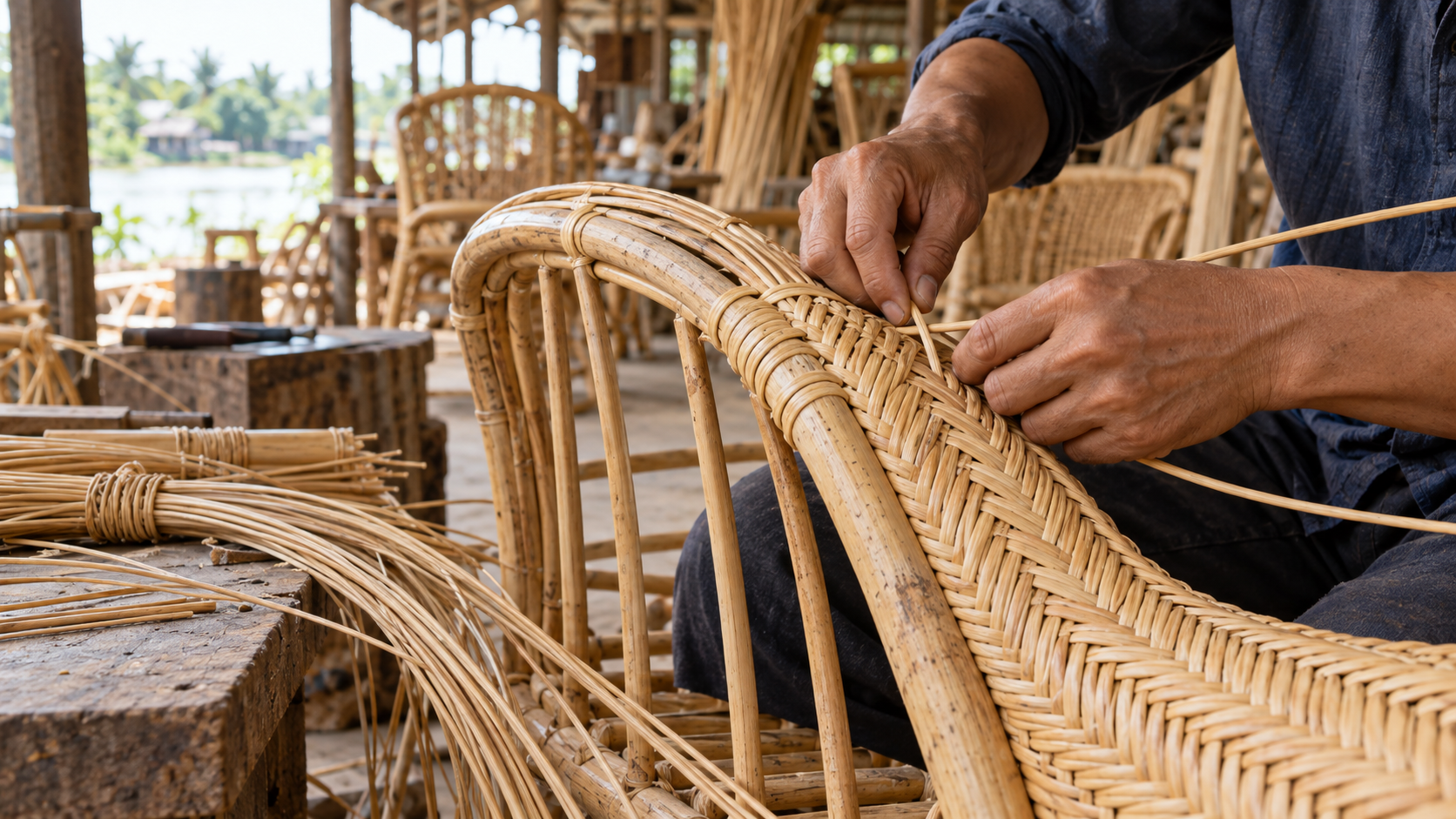
Every strand of weave on a finished piece is placed by hand. Fiber can be extruded by machine and frames can be fabricated quickly, but the weaving itself scales only with skilled hours. Because those hours vary so much from one design to the next, labor is usually the largest single variable in the unit price of woven furniture.
Weave pattern
Open patterns such as wide lattice or loose basket weave cover a frame far faster than tight diagonal, herringbone, or multi-strand patterns. Two chairs with identical frames can carry very different labor costs because of the pattern alone.
Strand width
Fine strands give a refined, tailored surface, and they require many more passes to cover the same area. Wider flat strands and round cores cover faster. Specifying strand width on the drawing removes one of the most common sources of quote variation.
Joints, edges, and curves
Each place the weave turns a corner, wraps a joint, or finishes an edge adds time. Curved arms, tapered legs, and sculptural backs are slower to weave than flat panels, and they are where differences in workmanship appear first.
Wage trend
Labor costs in Vietnam rise on a regular schedule. The government raised regional minimum wages by an average of 7.2 percent on January 1, 2026, under Decree 293/2025/ND-CP. Skilled weavers earn above the statutory minimum, but the floor lifts the whole wage structure, along with the social insurance contributions calculated from it. Buyers repricing a program quoted in a prior year should expect labor to account for part of the change.
Material Grade
Two pieces described as "rattan" on a quote can use very different material. Grade affects appearance and durability, and it also determines how much raw stock a factory sorts out before weaving begins. That waste is built into the price.
Natural rattan
Price follows diameter consistency, color uniformity, and whether the piece uses rattan core, peel, or cane. Higher grades yield fewer usable lengths per bundle after sorting. Supply also plays a part. Indonesia, the largest source of raw rattan, has restricted exports of unprocessed rattan since 2012 to support its own furniture industry, which keeps sourcing and grading a real cost variable for producers across the region. Our guide to rattan and wicker manufacturing covers the material in more depth.
Bamboo
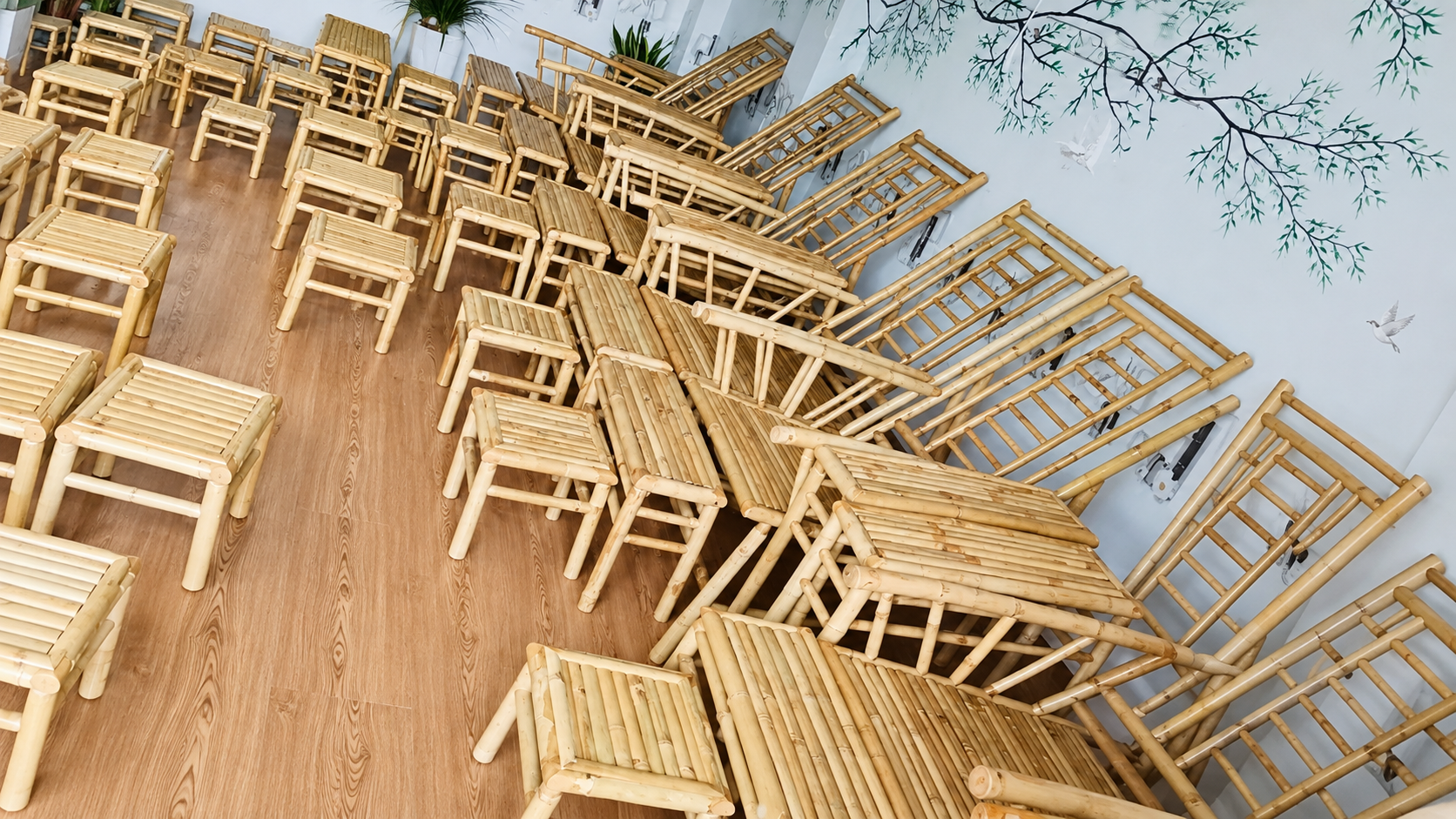
Species, age at harvest, drying time, and treatment against insects and mold all affect cost. Properly dried and treated bamboo takes longer to prepare and costs more, and it separates a piece that holds its shape in a dry, air-conditioned interior from one that splits. Our bamboo specification guide lists what buyers should confirm.
All-weather synthetic fiber
Synthetic fiber is typically made from HDPE or PVC. HDPE costs more and holds up better to UV exposure and temperature swings, which is why it is the standard choice for commercial outdoor use. UV stabilizer content, strand profile (flat, half-round, or round), and whether color runs through the fiber or sits on the surface all affect price. Our comparison of synthetic fiber and natural rattan covers when each material is the right call.
Frame Construction
The frame is priced by its material, the amount of material, and the labor to fabricate it. Buyers comparing quotes should confirm all three, since none of them is visible on a finished piece.
Frame material
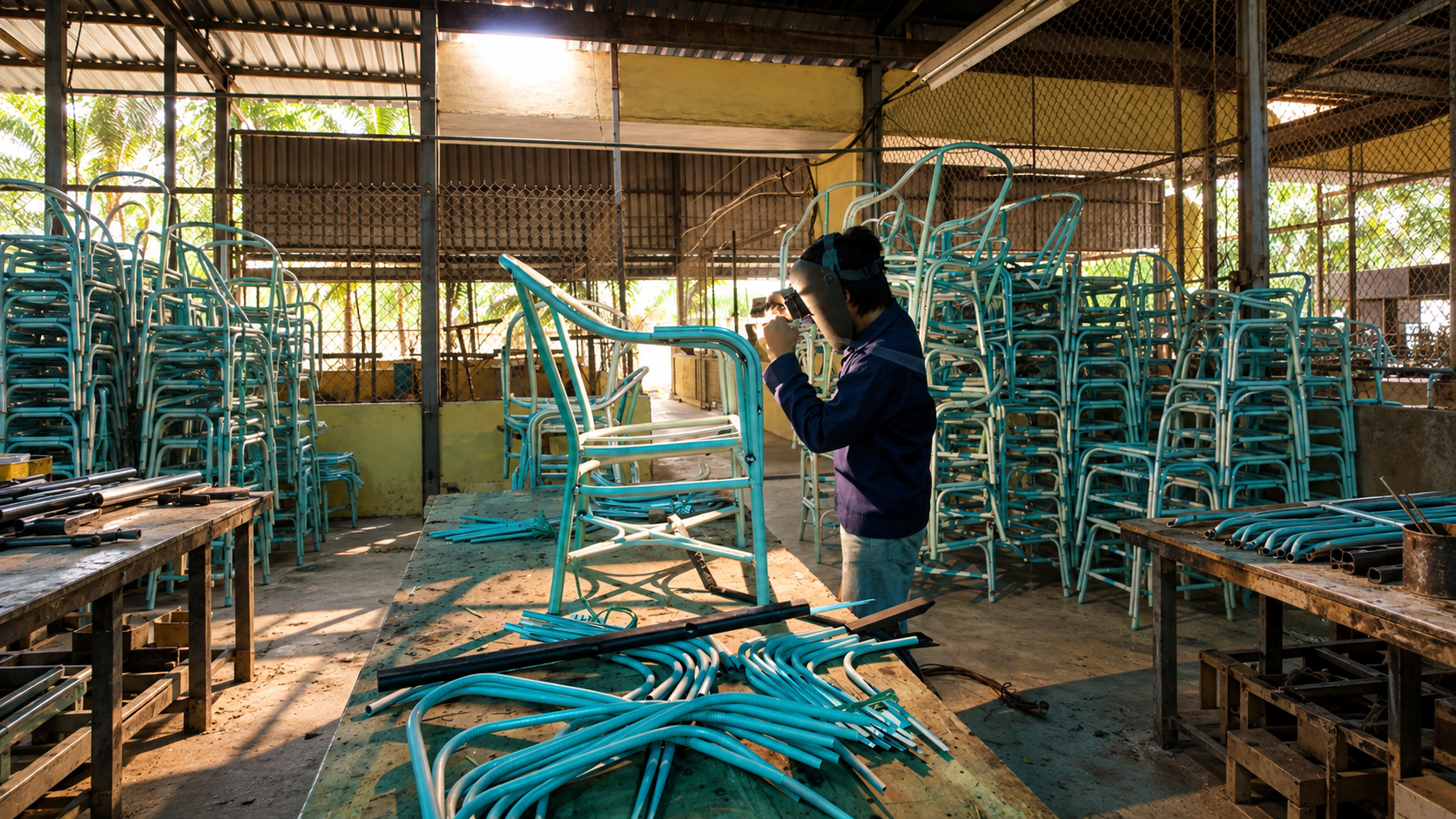
Aluminum costs more than steel and does not rust, which makes it the standard for outdoor and coastal programs. Powder-coated steel is heavier and less expensive, and it suits indoor use. Natural rattan pole and bamboo frames skip metal fabrication entirely, so their cost follows material grade and joinery.
Wall thickness
Thicker tube walls add material cost and weight. Thinner walls can pass a showroom inspection and still fail after a season of commercial use. Wall thickness belongs on the specification rather than left to the factory's default.
Welds and joints
Continuous welds, ground smooth before coating, take longer than tack welds and hold up far better under commercial loads. Our outdoor furniture specification guide covers frame and coating requirements for hospitality environments in detail.
Finishes, Cushions, and Hardware
These lines often explain the largest gaps between quotes, because suppliers treat them so differently.
Finish systems
The number of coats, the lacquer or stain system, and custom color matching all add cost. Matching a designer's finish sample usually adds sampling rounds, and a custom color may carry its own minimum batch.
Cushions and fabric
Cushions can be the most variable line on a quote. Fabric type (solution-dyed acrylic versus polyester), foam density, quick-dry foam for outdoor use, and zipper and seam construction all move the price. Some quotes include cushions, some exclude them, and some include a basic fabric with upgrades priced separately.
Hardware
Stainless steel fasteners and glides cost more than zinc-plated alternatives and are the right choice for outdoor and coastal settings. On a large program, small hardware differences add up across every unit.
Development and Sampling
Custom and OEM programs carry development costs that catalog designs do not: translating design drawings into factory specifications, building jigs and bending forms for frames, and producing sample rounds. These costs are usually charged as sample fees or spread across the first order.
Once a design is developed, reorders avoid most of that cost, which is one reason an established program is often priced more favorably than its first run. Our guide to OEM, private label, and custom manufacturing explains how development and sampling work under each production model.
Order Volume and Run Structure
Volume lowers unit cost because setup is spread across more pieces: cutting and bending frames, preparing and dyeing material, bringing weavers up to speed on a new pattern, and inspecting first articles.
Run structure carries as much weight as total quantity. A container of 300 identical dining chairs in one finish is a different job from the same 300 chairs split across six designs and three finishes. Each additional design and color adds setup, material preparation, and inspection time. This is also why our standard minimum is a full 40-foot container: at that scale, setup costs are spread across enough units for the price to reflect production rather than preparation.
Packing and Container Efficiency
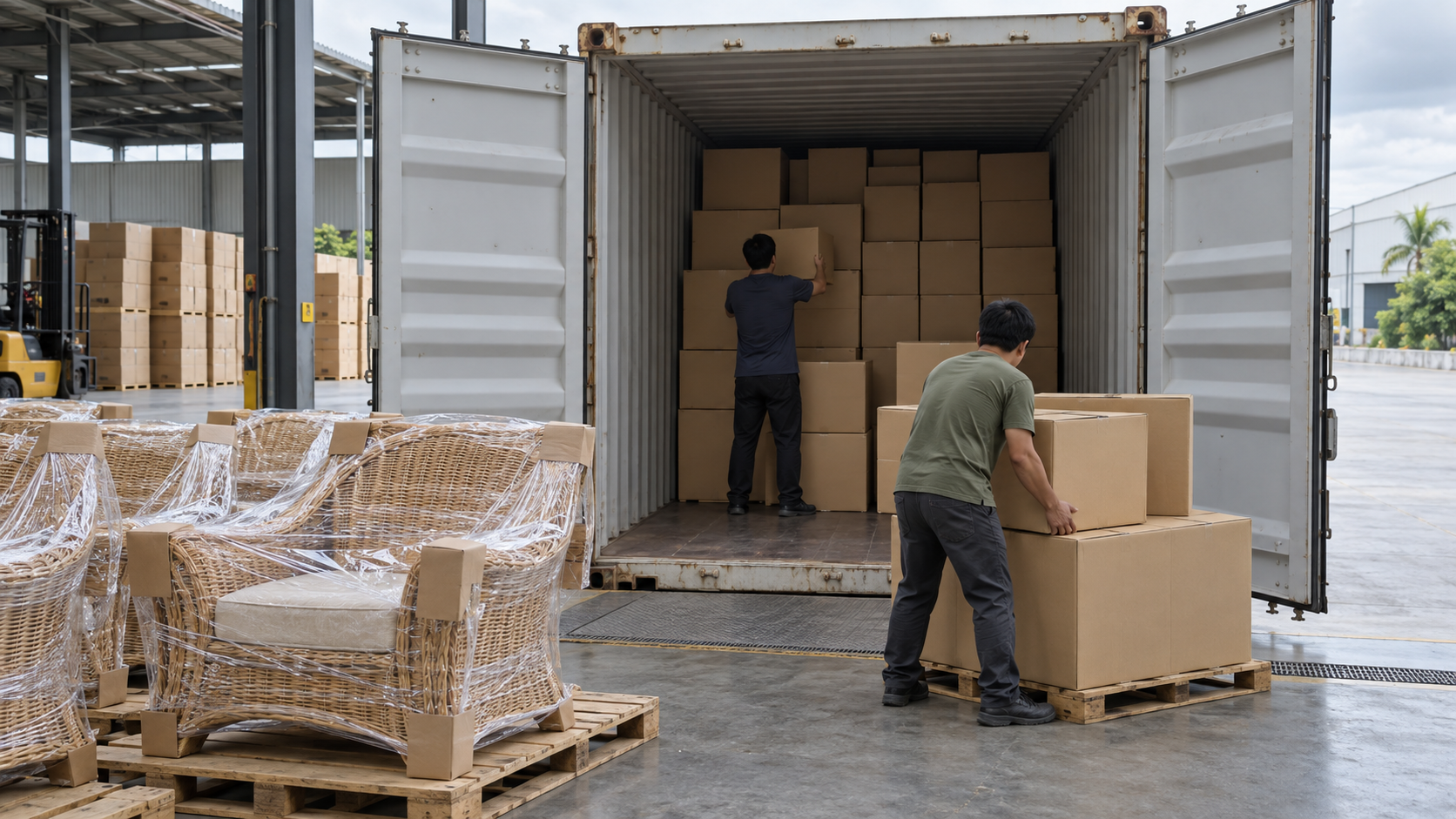
Export packing appears in the FOB price as materials and labor: cartons, corner protection, foam, and moisture protection. The larger cost effect comes from how many units fit in a container.
A 40-foot high cube container holds about 76 cubic meters, and woven furniture is bulky relative to its weight, so space runs out long before weight does. As a working example, a 40-foot container might hold roughly 300 dining chairs, 80 lounge chairs, or 40 daybeds. Costs charged per container (inland trucking to the port, export clearance, loading, and ocean freight) divide across whichever number applies, so each lounge chair in that example carries nearly four times the per-container cost of each dining chair.
Knock-down construction, stacking, and nesting change that math. Detachable legs, stackable frames, and sets packed inside one another can raise the number of units per container considerably. Because those choices shape the product itself, they are best settled during design and sampling. Our import guide shows how container efficiency carries through to landed cost.
How to Compare Quotes on Equal Terms
Quotes from different suppliers rarely describe the same product at the same level of detail. Before comparing unit prices, confirm that each quote states the following.
Incoterm
FOB, CIF, and EXW prices include different costs and cannot be compared directly.
Material grade
Rattan or bamboo grade, or synthetic fiber type and strand profile.
Frame
Material, tube dimensions, wall thickness, and finish system.
Cushions and fabric
Whether they are included, and the fabric and foam specification if so.
Packing
Packing method, carton dimensions, and units per container.
Sampling
Sample fees, the number of rounds included, and whether fees are credited against the production order.
Price validity
How long the quote holds, and what would trigger a revision (material costs, labor costs, or exchange rates).
When one quote sits well below the rest
The gap usually traces to a thinner frame, a lower material grade, excluded cushions, or a looser weave. Asking each supplier to itemize its quote against the same specification tends to surface the difference quickly.
Our hotel furniture RFQ guide covers how to structure a specification so quotes come back comparable. For buyers still assessing suppliers, our guide to vetting a Vietnamese furniture manufacturer covers what a quote can reveal about the operation behind it, and our buyer's guide to sourcing furniture from Vietnam gives the broader context.
Working with Pham Lifestyles
Pham Lifestyles produces handcrafted rattan, bamboo, and all-weather synthetic fiber furniture through established factory partnerships in Nha Trang, Ho Chi Minh City, Binh Duong, and Dong Nai, with direct production oversight and a commercial team in New York. We quote FOB against a written specification, walk buyers through the cost drivers behind each price, and raise packing and container planning during development rather than after production.
We work best with hospitality groups, OEM and private label brands, retailers, and importers planning programs at container scale. For buyers with a specification in hand, or a design that still needs one, our team can review it and show where the cost sits before a quote is issued.
See What We Make for the categories we produce, or contact our team to discuss a program.
Pricing a woven furniture program
Get a quote built on a real specification
Share drawings, quantities, and target markets, and our team will prepare an FOB quote with the material, construction, and packing assumptions stated clearly.
Start a Conversation